
HRD Corp Malaysia

HRD Corp Malaysia: Empowering Workforce Development

Artificial Intelligence in Corporate Training refers to the integration of advanced machine learning algorithms, natural language processing, and predictive analytics into Learning and Development (L&D) ecosystems to automate, personalize, and optimize employee skill acquisition. Unlike traditional training methods that rely on static, one-size-fits-all curricula, AI-driven systems analyze vast amounts of data regarding an employee’s current roles, past performance, learning preferences, and career aspirations to tailor educational experiences in real-time. This technological shift is crucial in today’s rapidly evolving business landscape because it allows organizations to close competency gaps faster than ever before, ensuring that the workforce remains agile and competitive amidst digital disruption. Who benefits from this integration is vital to understand: employers gain a measurable return on investment through enhanced productivity and retention, while employees receive engaging, relevant, and future-proof skill development that aligns directly with their individual career trajectory, rather than generic mandatory training modules.
Table of Contents
- The Evolution of L&D: Entering the AI Era
- How AI-Powered Learning and Development Works
- Key Benefits of Integrating AI into Workforce Upskilling
- Comparison: Traditional eLearning vs. AI-Driven Learning
- Frequently Asked Questions (FAQs)
- Conclusion
- Credible Sources
The Evolution of L&D: Entering the AI Era
The landscape of corporate education has historically been dominated by instructor-led classroom sessions and, later, generic eLearning SCORM packages designed for mass consumption. While these methods provided a baseline for compliance and standardized knowledge transfer, they frequently failed to address the nuanced, rapid-fire skill requirements of the modern digital economy, often resulting in low engagement rates and poor knowledge retention among staff. The introduction of Artificial Intelligence in Corporate Training marks a paradigm shift, moving away from episodic educational events toward continuous, embedded learning that evolves alongside the employee’s daily workflow. This transition is not merely a technological upgrade but a strategic necessity, as organizations realize that the speed at which their workforce can reskill is now a primary determinant of competitive advantage. By leveraging the power of data, companies are transitioning from reactive training models—where training occurs after a gap is identified—to predictive models that anticipate future skill needs.
How AI-Powered Learning and Development Works
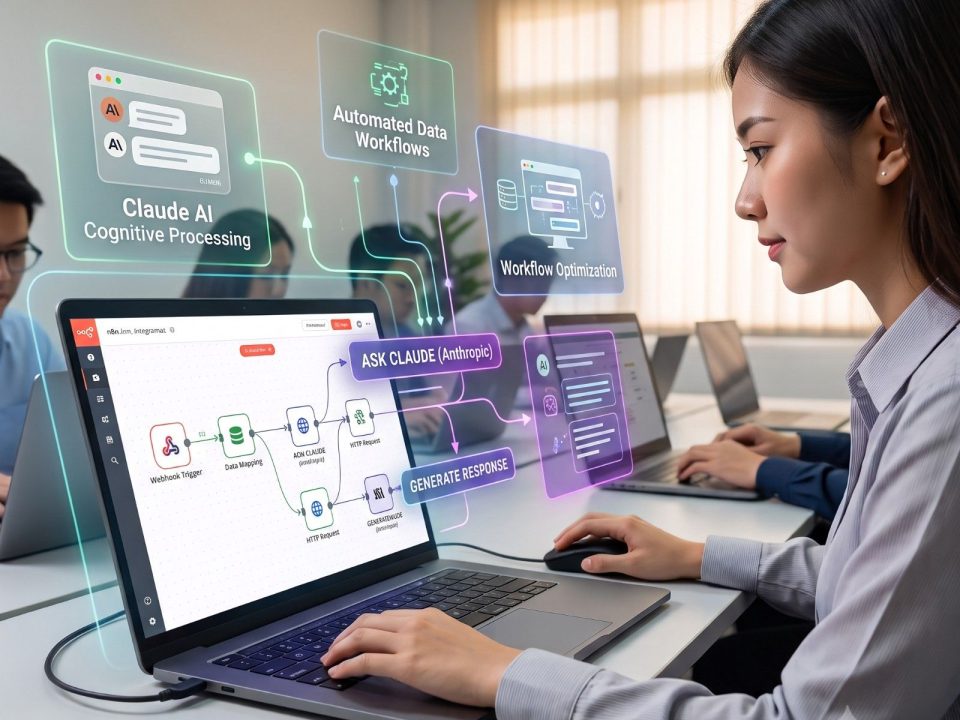
AI functions within corporate training by utilizing sophisticated algorithms to process data inputs and generate intelligent outputs that mimic human cognitive functions like reasoning and learning. It begins by ingesting data from various sources, including Human Resources Information Systems (HRIS), performance reviews, job descriptions, and the user’s interactions within the Learning Management System (LMS). Through machine learning, the system identifies patterns and correlations between specific learning activities and improved job performance, allowing it to constantly refine its recommendations. This process enables what is known as adaptive learning, where the platform dynamically adjusts the difficulty level and format of content based on the learner’s real-time responses. Furthermore, Natural Language Processing (NLP) allows for the deployment of intelligent chatbots that can act as virtual coaches, answering employee questions instantly and guiding them toward necessary resources without human intervention.
Key Benefits of Integrating AI into Workforce Upskilling
Implementing AI-driven solutions into learning strategies offers profound advantages that extend beyond simple administrative efficiency, fundamentally changing how talent is developed. The shift towards intelligence-based platforms addresses chronic L&D challenges related to engagement, measurement, and scalability in ways previously thought impossible.
The primary benefits include:
- Hyper-Personalized Learning Paths: Instead of subjecting all employees to the same coursework, AI analyzes individual competency profiles to create unique learning journeys. If an employee demonstrates proficiency in a specific area during an automated skill assessment, the AI will allow them to test out of basic modules and immediately advance to complex topics, respecting their time and focusing effort where it is most needed.
- Enhanced Engagement and Retention: By utilizing recommendation engines similar to those used by streaming services, AI suggests content that is highly relevant to the user’s current role and future interests. When learning is relevant and delivered in the preferred format (e.g., video vs. text), employees are more likely to engage deeply with the material, leading to better retention and practical application of skills on the job.
- Data-Driven Insights for L&D Leaders: AI moves training evaluation beyond simple completion rates (vanity metrics) to actionable insights. It can analyze vast datasets to show HRDC professionals and L&D managers exactly which training modules are correlating with improved KPIs in specific departments, enabling smarter budget allocation and strategic planning for future workforce needs.
Comparison: Traditional eLearning vs. AI-Driven Learning
To understand the transformative potential of AI, it is helpful to compare it directly with standard eLearning methodologies that many organizations still rely upon.
| Feature | Traditional eLearning (Standard LMS) | AI-Driven Personalized Learning |
|---|---|---|
| Content Delivery | Linear, static paths; everyone receives the same modules in the same order. | Dynamic, non-linear paths; content adjusts based on real-time performance. |
| Assessment | Standardized quizzes with fixed questions and answers. | Adaptive questioning that adjusts difficulty based on previous answers. |
| Skill Gap Identification | Manual processes, usually based on annual reviews or manager feedback. | Automated, continuous identification based on data analysis and performance. |
| Content Curation | Manually curated by L&D administrators, often slow to update. | AI automatically curates and recommends external and internal content. |
| Feedback Loop | Delayed feedback; often waits for instructor grading or course completion. | Instantaneous feedback and corrective guidance provided by the system. |
Frequently Asked Questions (FAQs)
1. Will AI in corporate training replace human trainers and instructional designers?
No, AI is designed to augment, not replace, human trainers. It handles repetitive tasks like grading, basic inquiries, and content curation, freeing up human professionals to focus on high-level strategy, complex emotional intelligence training, mentor-ship, and designing the overall learning architecture.
2. How does AI accurately identify an employee’s skill gaps?
AI identifies skill gaps by triangulating data from multiple sources. It compares the skills listed in an employee’s current job description against their performance review data, assessment scores within the LMS, and even actual work output metrics, highlighting discrepancies between required competencies and demonstrated abilities.
3. Is implementing AI-powered learning expensive for mid-sized companies?
While the initial investment can be significant, the long-term ROI often justifies the cost through improved efficiency and reduced reliance on expensive external training. Many modern LMS providers are increasingly building AI features into their standard subscription models, making the technology more accessible to mid-sized organizations.
4. What are the data privacy concerns regarding AI in workplace learning?
Data privacy is a critical concern. Organizations must ensure compliance with regulations like GDPR or local HRDC guidelines when collecting employee performance data. It is essential to use transparent AI systems, inform employees what data is being collected for training purposes, and ensure data is anonymized wherever possible.
5. How do we measure the success or ROI of an AI training implementation?
Success is measured by moving beyond course completion rates to business impact metrics. ROI can be determined by analyzing if the AI-recommended training leads to faster onboarding times, higher sales figures in trained departments, reduced compliance violations, or increased internal mobility rates among upskilled employees.
Conclusion
The integration of Artificial Intelligence in Corporate Training is no longer a futurist concept but a present-day reality for forward-thinking organizations. By shifting from static, generalized training to dynamic, personalized learning experiences, companies can ensure their workforce remains resilient in the face of constant technological change. While challenges regarding implementation costs and data governance exist, the benefits of scalable, efficient, and deeply engaging skill development provide a decisive competitive edge. Embracing these tools now is essential for any organization committed to fostering a culture of continuous improvement and securing its future readiness.
Credible Sources
- McKinsey & Company: The Future of Work after COVID-19. Available at: https://www.mckinsey.com/featured-insights/future-of-work/the-future-of-work-after-covid-19
- World Economic Forum (WEF): The Future of Jobs Report. Available at: https://www.weforum.org/reports/the-future-of-jobs-report-2023/
- U.S. Department of Education – Office of Educational Technology: Artificial Intelligence and the Future of Teaching and Learning. Available at: https://www2.ed.gov/documents/ai-report/ai-report.pdf
- Google Scholar Search Results: Academic papers on “Adaptive Learning Systems in Corporate Training.”
For more of the Artificial Intelligence Mastery Course, please visit https://www.thaninstitute.com/artificial-intelligence-mastery-course/