Generative AI: Concepts and Applications
HRD Corp Claim Guide
Introduction Definition: AI upskilling is the structured process of teaching employees practical artificial intelligence skills—such as data literacy, prompt engineering, and workflow automation—so they can augment decision-making and improve productivity across business functions. It matters because AI now sits at the core of digital transformation, letting organisations automate routine tasks, personalise customer experiences, and accelerate analysis without necessarily hiring large specialist teams. For Malaysian companies, AI upskilling aligns with national productivity goals and can be planned as HRDC-claimable corporate training, making capability-building both strategic and cost-effective. It benefits frontline staff who want to automate repetitive tasks, managers who need faster insights, IT teams responsible for governance, and leadership aiming to future-proof operations. In practice, effective programmes pair hands-on tools with governance guidelines so teams can deploy AI responsibly and measurably, ensuring value creation while meeting compliance and data security standards.
- What Is AI Upskilling?
- Why It Matters to Malaysian Businesses
- Who Should Attend and When to Start
- AI Upskilling Using the 5W + 1H Framework
- Comparison: No AI vs No‑Code AI vs Advanced AI
- How to Implement an HRDC‑Ready AI Programme
- Benefits
- Practical Use Cases and Examples
- Measuring Success and ROI
- Frequently Asked Questions
- Conclusion
- Suggested Credible Sources
What Is AI Upskilling?
AI upskilling is a competency-building journey that helps non-technical and technical employees master the fundamentals of artificial intelligence so they can embed it into day-to-day work. While advanced machine learning once required specialist teams, modern no‑code and low‑code tools enable marketers, finance analysts, HR professionals, and operations teams to automate routine processes and generate insights with minimal coding. A robust programme blends theory (AI concepts, models, and risks) with practice (hands-on labs using productivity copilots, prompt engineering, and data preparation). It also integrates governance topics like privacy, bias mitigation, and auditability, which are essential for regulated industries and public-sector projects. The outcome is a workforce able to identify automation candidates, build safe prototypes, evaluate ROI, and scale solutions under IT oversight, ensuring that AI upskilling translates into tangible business value rather than ad hoc experimentation.
Why It Matters to Malaysian Businesses
For companies in Malaysia, AI upskilling supports competitiveness, export readiness, and service quality in sectors from manufacturing and logistics to banking and shared services. AI-enabled teams deliver faster quotes, fewer errors, and richer customer interactions, while leaders gain near-real-time visibility into operations through dashboards and anomaly alerts. With the right controls, AI reduces compliance burdens by automating document checks and summarising regulatory text for quick review. The HRDC framework helps organisations plan structured learning pathways and claim eligible training, lowering the cost of transformation and speeding adoption. Beyond efficiency, upskilling builds a culture of continuous improvement where employees initiate AI experiments, collect evidence, and propose scaling based on measured outcomes, de‑risking innovation and aligning it with strategic objectives.
Who Should Attend and When to Start
Start by including cross‑functional cohorts: business managers who own processes, analysts who handle data, and IT/security representatives who ensure safe deployment. Early participants often include HR (for policy drafting and talent analytics), finance (for forecasting and reporting), customer service (for workflow automation and knowledge retrieval), and operations (for demand planning and quality). Senior sponsors should attend an executive primer to set goals and success metrics, while project champions take a deeper practitioner track to build proofs of concept. The best time to start is now—begin with a 6–8 week pilot cycle tied to one or two high-impact workflows, then iterate quarterly. This cadence lets teams learn by doing, demonstrate value to stakeholders, and secure budget to scale responsibly.
AI Upskilling Using the 5W + 1H Framework
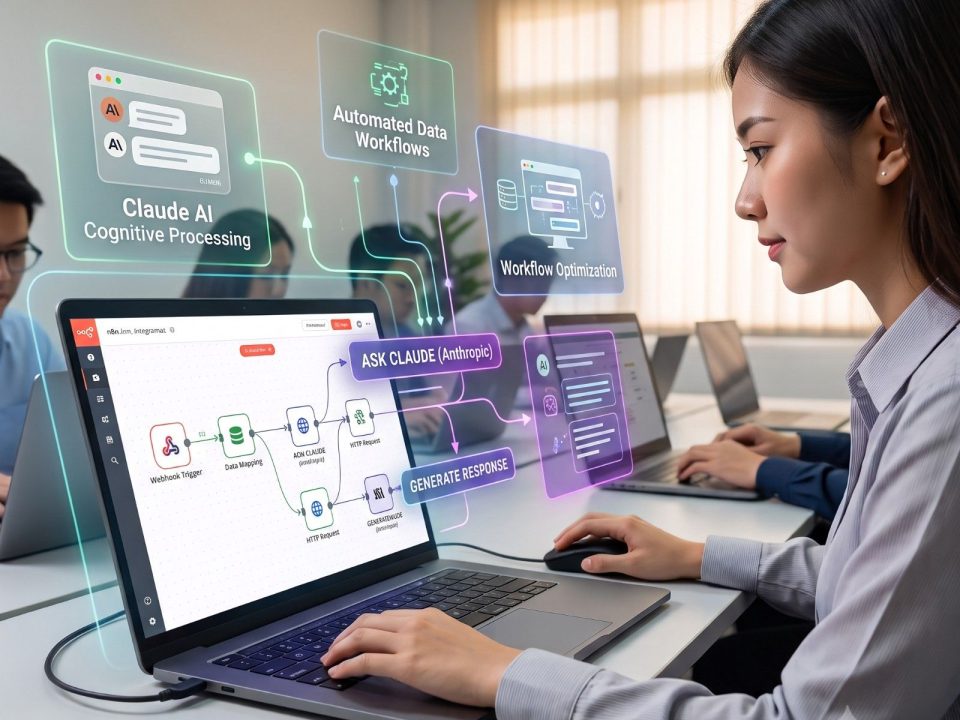
Who: cross‑functional employees in HR, finance, operations, sales, and IT, coached by an internal or external AI facilitator. What: a structured curriculum covering AI fundamentals, prompt engineering, data literacy, no‑code automation, and governance. When: begin with a short pilot during a low‑risk period (e.g., between financial closes) and expand after results are measured. Where: a blended format—virtual labs for tools exposure and in‑person workshops for collaborative process redesign—works best for Malaysian teams across multiple sites. Why: to reduce cycle times, improve decision quality, and create differentiated customer experiences while maintaining compliance. How: select two measurable processes, baseline metrics, run hands‑on labs, deploy a pilot, monitor results, and present findings to the steering committee for scale‑up.
Comparison: No AI vs No‑Code AI vs Advanced AI
| Capability Level | Typical Tools | Speed to Value | Governance Needs | Example Outcome |
|---|---|---|---|---|
| No AI Adoption | Spreadsheets, email, manual SOPs | Slow; relies on manual effort | Basic SOPs, manual checks | Manual report takes 2 days per week |
| No‑Code AI | Productivity copilots, form extractors, workflow bots | Fast; weeks to impact | Access control, prompt policies, basic data privacy | Automated report in 15 minutes with human review |
| Advanced AI | ML platforms, vector databases, custom integrations | Moderate; months to scale | Model risk management, monitoring, audit trails | Predictive demand planning with anomaly alerts |
How to Implement an HRDC‑Ready AI Programme
To make your programme HRDC‑ready, map learning outcomes to job roles and document the curriculum, hours, and assessments. Start with a needs analysis to prioritise processes with measurable bottlenecks—e.g., time spent on reconciliations, onboarding paperwork, or service email triage. Design two tracks: an executive track for strategy, value cases, and risk oversight; and a practitioner track for hands‑on labs using approved tools, datasets, and case studies relevant to Malaysia’s regulatory environment. Establish governance early by defining acceptable use, data handling, and escalation procedures, and by setting up a cross‑functional review board. Finally, plan for sustainment with communities of practice, a repository of reusable prompts and workflows, and quarterly retros to update standards as tools evolve and policy guidance matures.
Benefits
When structured well, AI upskilling delivers compounding returns across cost, speed, quality, and risk reduction. Employees gain confidence to document processes, test automations, and communicate results, creating a repeatable pattern for continuous improvement. Managers get clearer metrics and visibility, enabling better prioritisation and resourcing. Customers experience faster responses, more accurate information, and higher service consistency. Meanwhile, IT benefits from a governed pathway to scale safe solutions rather than blocking shadow IT, and leadership can align investment with evidence, reducing the risk of hype-driven spending. The net effect is an organisation that moves faster with fewer errors while meeting compliance obligations and strengthening employer branding as a learning‑centric workplace.
- Productivity and cost savings: Reduce manual processing time by 30–60% in targeted workflows (e.g., document classification, data entry, reporting) while reallocating talent to higher‑value tasks.
- Quality and consistency: Use standardised prompts, templates, and validation checks to lower rework, improve auditability, and maintain brand voice across channels.
- Faster decision-making: Summarise long documents, surface key risks, and compare scenarios in minutes, supporting managers with timely, data‑driven options.
- Risk and compliance alignment: Implement access controls, logging, and human‑in‑the‑loop review so outputs meet regulatory and internal policy standards.
- Talent retention and engagement: Employees who see career growth via corporate AI training are more likely to stay and champion innovation.
Practical Use Cases and Examples
Human Resources can automate screening questions, generate interview summaries, and draft policy outlines, with HR reviewing and approving final output for accuracy. Finance teams can reconcile transactions, create rolling forecasts, and generate commentary on variances by combining spreadsheet add‑ins with AI helpers. Operations can auto‑extract data from delivery orders, predict delays based on historical patterns, and alert supervisors when thresholds are breached. Sales and marketing can segment customers, craft first‑draft proposals, and personalise campaigns at scale while maintaining tone and compliance. Customer service can triage emails, suggest replies, and build a searchable knowledge base that retrieves verified answers with source citations. Each use case should be piloted under governance, measured against baselines, and then templated so other teams can replicate the win.
Measuring Success and ROI
Define success before training begins, using simple, auditable metrics: time saved per task, reduction in errors, cycle time improvements, employee satisfaction, and compliance exceptions. Attach each metric to a baseline (e.g., average minutes per document) and commit to post‑training reviews after 30, 60, and 90 days. Estimate ROI by translating time saved into cost avoidance or revenue enablement, and remember to account for quality improvements and risk reduction. Use dashboards to track adoption—number of active users, prompts or workflows reused, and processes moved from pilot to scale. Finally, document lessons learned and update governance policies to reflect what worked, ensuring that new projects start stronger and follow a consistent, proven pattern.
Frequently Asked Questions
What is AI upskilling and how is it different from general digital training?
AI upskilling focuses on applied AI tasks—prompt engineering, data preparation, and workflow automation—rather than broad software literacy, enabling teams to deliver measurable, AI‑driven process improvements.
Is AI training HRD Corp claimable in Malaysia?
Yes, when the programme meets HRDC requirements for course structure, documented hours, learning outcomes, and assessments; consult your training provider and HRDC guidelines for eligibility.
How long does it take to see results from AI upskilling?
Pilots often show results within 4–8 weeks if they target well‑defined processes with clear baselines and include hands‑on labs tied to real datasets and workflows.
What tools are best for beginners—no‑code or advanced ML platforms?
Start with no‑code tools for quick wins and governance learning, then progress to advanced platforms for predictive and integrated use cases once the organisation is ready to manage model risk.
How do we manage risks like bias, privacy, and accuracy?
Adopt human‑in‑the‑loop reviews, access controls, dataset documentation, prompt policies, and audit logging; escalate high‑impact use cases to an AI review board before scaling.
Conclusion
AI upskilling offers Malaysian organisations a pragmatic path to productivity, quality, and innovation—without over‑reliance on scarce specialist talent. By starting with no‑code wins, embedding governance from day one, and aligning training to HRDC standards, leaders can convert curiosity into repeatable value. The key is to treat AI as a team sport: cross‑functional cohorts, measurable pilots, and continuous improvement powered by data, templates, and a shared repository of prompts and workflows. With thoughtful design and disciplined execution, your workforce will deliver faster, better, and safer outcomes—and your organisation will build durable competitive advantage in an increasingly AI‑driven economy.
Suggested Credible Sources
- Wikipedia: Artificial intelligence
- NIST AI Risk Management Framework (.gov)
- HRD Corp Malaysia (.gov.my)
- OECD AI Policy Observatory (.org)
- MIT Sloan – Ideas Made to Matter (.mit.edu)
- Google Scholar: Enterprise AI adoption and productivity
Keywords: AI upskilling, HRDC-claimable training Malaysia, corporate AI training, prompt engineering, no-code AI, machine learning in business, digital transformation, AI governance, data literacy, automation.
Note: Always align AI projects with your organisation’s data protection policies and regulatory obligations, and consult HRDC guidelines to confirm claim eligibility and documentation requirements.
For more of the Artificial Intelligence Mastery Course, please visit https://www.thaninstitute.com/artificial-intelligence-mastery-course/