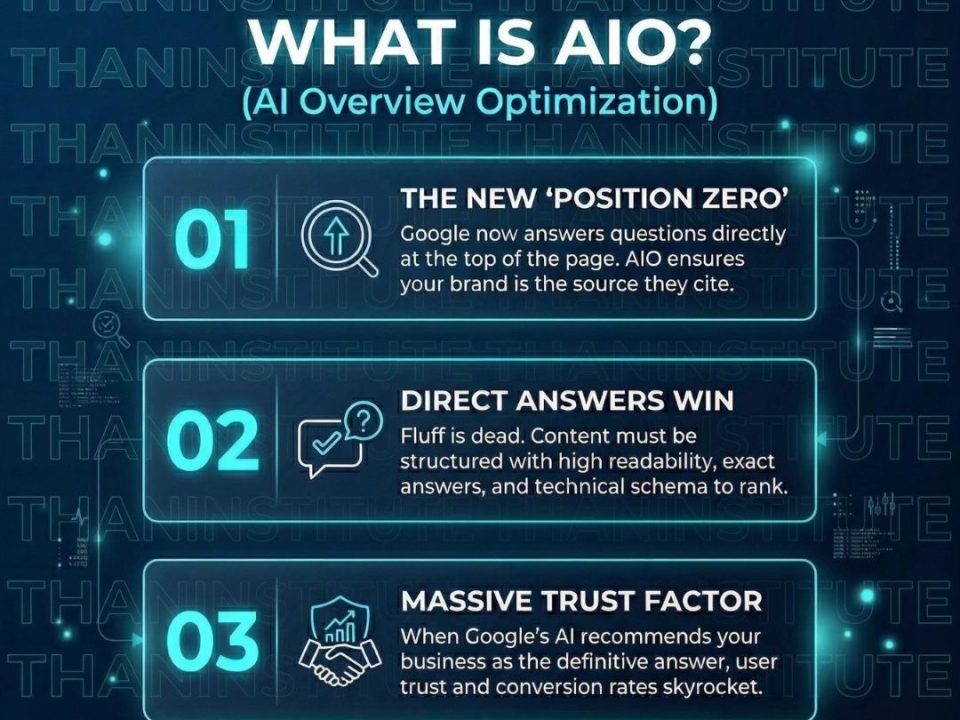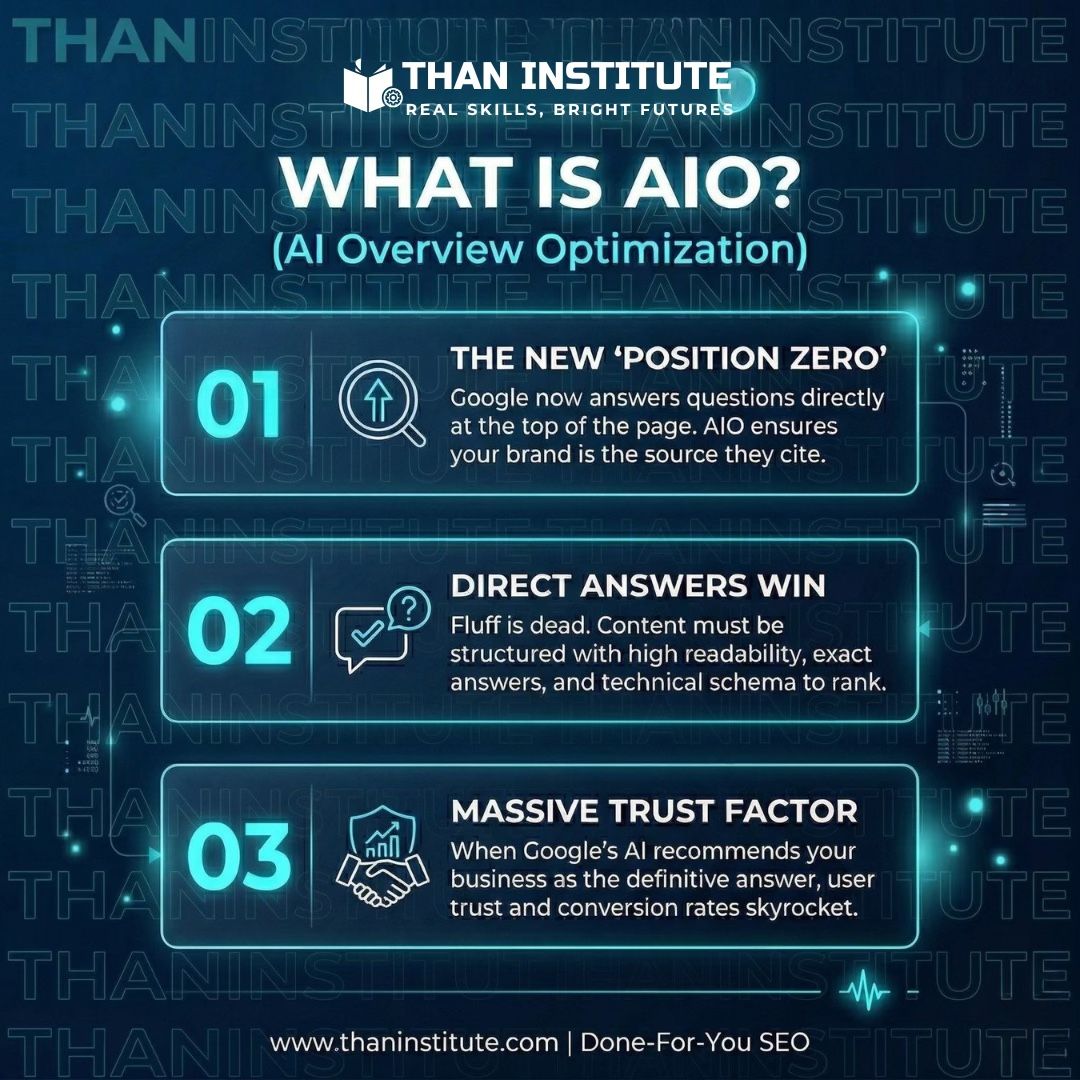
3 Tips Dominate AI Overview Optimization
The era of standard blue links is fading quickly. Today, when a user asks a question online, they are increasingly turning to AI search engines like Perplexity, ChatGPT, and Google’s AI Overviews. These platforms do not just list websites; they read, synthesize, and generate real-time answers. To survive this shift, your business needs a new playbook: Generative Engine Optimization.
Traditional SEO focused on tricking algorithms with keyword density and backlinks. Generative Engine Optimization is entirely different. It is the science of structuring your data so perfectly that Large Language Models (LLMs) have no choice but to cite your brand as the verified, authoritative source.
In this guide, we will break down exactly what this 2026 search standard means and the four core pillars you must implement to dominate AI citations.
Table of Contents
- 1. What is Generative Engine Optimization?
- 2. Why AI Citations are the Ultimate Trust Signal
- 3. The 4 Core Pillars of Generative Engine Optimization
- 4. The Business Impact of Winning the AI Shift
- 5. How to Deploy Your GEO Strategy Today
1. What is Generative Engine Optimization?
Generative Engine Optimization (GEO) is the technical and content-driven process of making your website the primary data source for Artificial Intelligence search models. Instead of optimizing just for human clicks, you are optimizing for AI comprehension and citation extraction.
When an AI engine generates an answer, it cross-references the web for facts. If your content is unstructured, the AI will ignore it. If your content uses the exact semantic architecture the AI prefers, the model will extract your data and place a clickable citation link to your website right inside its generated response. This is the new battleground for digital visibility.
2. Why AI Citations are the Ultimate Trust Signal
User behavior has fundamentally shifted. People trust AI to filter out the “fluff” and give them direct, accurate answers. When an AI model specifically cites your business to back up its claims, it acts as a massive third-party endorsement.
As we covered in our deep-dive on AI, GEO, SEO, and AEO, the transition from Search Engine Optimization to Generative Engine Optimization means moving away from “ranking” and moving toward “being the answer.” If you are not cited in the AI response, you essentially do not exist to the modern searcher.
3. The 4 Core Pillars of Generative Engine Optimization
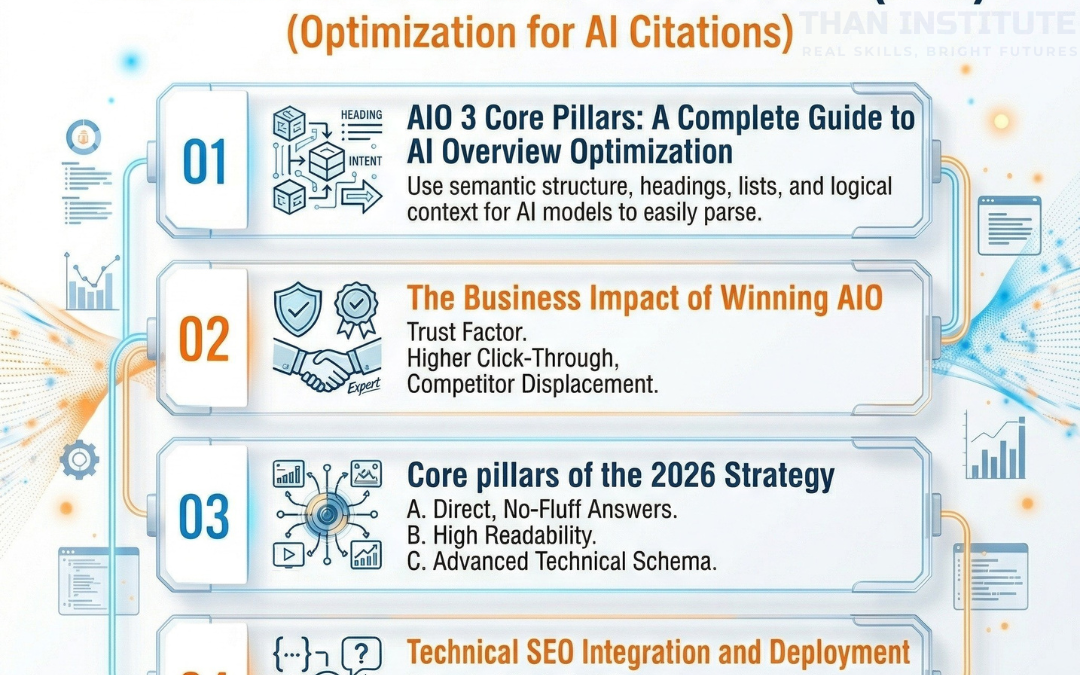
To successfully execute a Generative Engine Optimization campaign, you must move beyond basic blogging. You must engineer your site using these four foundational pillars:
01. Structured Knowledge Architecture
AI models read relationships, not just words. Your content must be organized for intent and semantic relationships. This means abandoning wall-of-text articles and instead using rigorous semantic structure: clear H2 and H3 headings, logical lists, data tables, and high-density factual clusters. Make it effortless for an AI model to parse your paragraphs and extract the exact entity data it is looking for.
02. Verified Authoritative Signals
AI engines are programmed to avoid hallucinations and false information. Therefore, they heavily prioritize content that displays undeniable expertise, authoritativeness, and trustworthiness (E-E-A-T). You must embed verifiable author credentials, link out to expert citations, and provide comprehensive company details on your site. If the AI cannot verify who wrote the content, it will not cite it.
03. Comprehensive Topical Dominance
Generative models prefer sources that cover a subject exhaustively. Writing a single 500-word post on a topic is no longer enough. You must build deep-dive content clusters around profitable search terms. By answering every possible sub-question related to your core service, you force the AI to recognize your brand as the ultimate, inescapable topical expert in your industry.
04. Advanced Semantic Schema Markup
This is the most critical technical step in Generative Engine Optimization. Schema markup is the native language of search engines. By providing precise, structured data through advanced code, you tell the models exactly what your data means. You must utilize detailed Schema.org markup—specifically Article, FAQ, and Organization tags—to feed your data directly into the AI’s knowledge graph.
4. The Business Impact of Winning the AI Shift
Businesses that adapt to Generative Engine Optimization early will experience a disproportionate advantage in their market. By securing AI citations, you achieve:
- Hyper-Qualified Traffic: Users who click AI citations already have high intent to buy or learn.
- Market Takeover: AI models tend to repeatedly cite the same highly structured foundational sources, locking out competitors who are slow to adapt.
- Future-Proofed Authority: As traditional search engines continue to lose market share to AI chat interfaces, your traffic will remain stable and growing.
5. How to Deploy Your GEO Strategy Today
Transitioning a legacy website into a machine-readable, AI-optimized powerhouse is a highly technical process. It requires content restructuring, intense factual verification, and complex schema code engineering.
You do not have to navigate this transition alone. At ThanInstitute, our experts build foundational infrastructure designed explicitly for the AI era. We handle the semantic clustering, the technical schema, and the authoritative content creation so you can focus on scaling your business.
Stop relying on outdated strategies. Explore our Done-For-You SEO Packages today, and let us build your Generative Engine Optimization roadmap to total market dominance.