
Where Kids Learn Real-World Skills Through Play
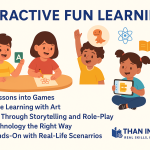
5 Creative Ways to Make Learning Fun and Interactive for Kids
Where Kids Learn Real-World Skills Through Play
5 Creative Ways to Make Learning Fun and Interactive for Kids
In today’s fast-paced, screen-filled world, it’s becoming harder than ever to keep young minds excited about learning. But what if learning could feel more like play and less like pressure? That’s where interactive learning comes in—a dynamic, hands-on approach that turns students from passive listeners into active explorers.

What is Interactive Learning?
Interactive learning is all about doing, not just watching. It blends technology, games, discussions, experiments, and group activities to make lessons come alive. Instead of memorizing facts, students learn by engaging with the content—through touch, talk, trial, and teamwork.
Think building a bridge with spaghetti to understand engineering, or creating your own “money” to learn about economics. It’s real-world, it’s relatable—and it’s fun.
7 Reasons Why Interactive Learning Works
Boosts Engagement
Kids are more focused when they can move, create, and collaborate. Interactive activities break the routine and spark curiosity.Improves Knowledge Retention
Studies show that active participation helps learners retain information better than passive listening.Encourages Critical Thinking
Solving puzzles, making decisions in simulations, and group discussions challenge kids to think deeper and smarter.Supports Different Learning Styles
Visual, auditory, and kinesthetic learners all benefit from interactive experiences that go beyond traditional teaching.Builds Communication and Teamwork
Group activities encourage kids to share ideas, listen to others, and work together toward a goal.Develops Real-World Skills
From budgeting in pretend shops to designing a product pitch, students gain practical life skills they’ll carry into adulthood.Increases Confidence and Independence
When students take charge of their learning, they feel proud, empowered, and more willing to try new things.
Easy Interactive Learning Ideas
Whether you’re a teacher, parent, or facilitator, here are simple ways to apply interactive learning:
Create quiz-based games or scavenger hunts
Use role-play to act out historical events or business scenarios
Introduce storytelling, debates, or design challenges
Explore educational apps like Nearpod, Kahoot!, and BookWidgets
Real-Life Example: Bringing Economics to Life
At Than Institute, we’ve seen the results firsthand. In our ThEd Econs program, children learn economics not from textbooks—but by running their own mock markets, designing currency, and practicing budgeting. With every activity, they gain a stronger understanding of how money works in the real world—all while having a great time.
Interactive learning isn’t just fun—it’s transformative. When children are actively involved, they don’t just learn better; they love learning more. In a world that values creativity, adaptability, and problem-solving, interactive learning helps kids build the confidence and skills they need to thrive.