Is Your Warehouse Ready for Robots? 6 Easy Signs to Check
Robot Gudang di Malaysia: Panduan Mudah untuk Mula Automasi Gudang
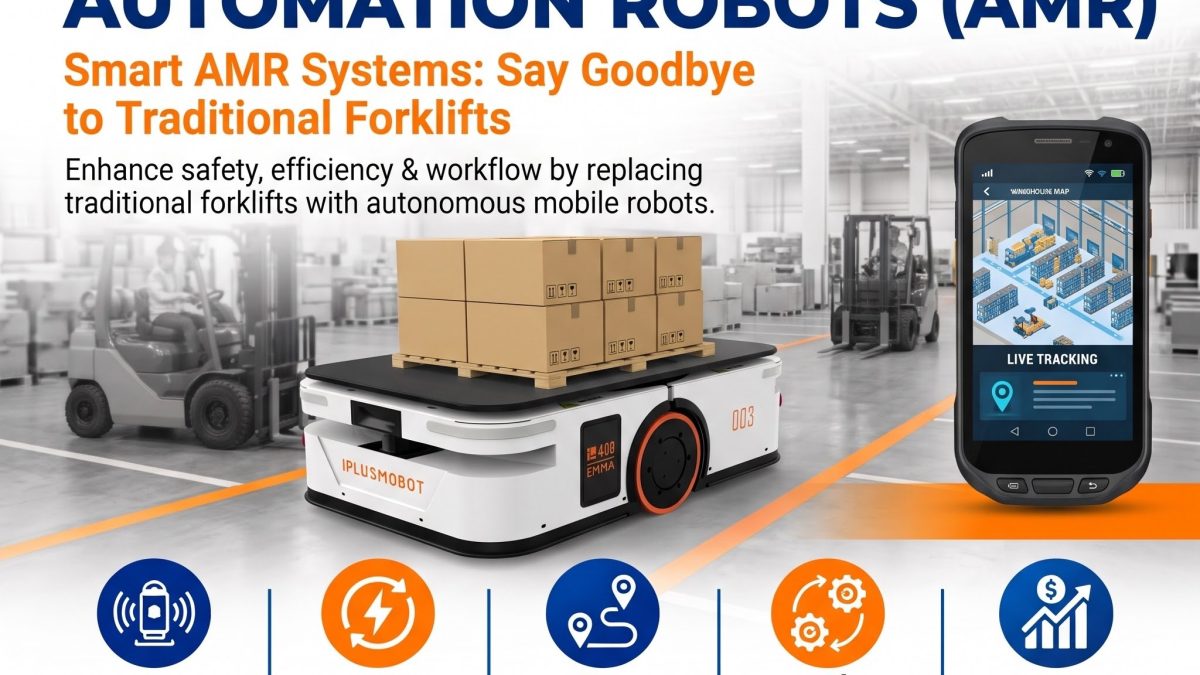
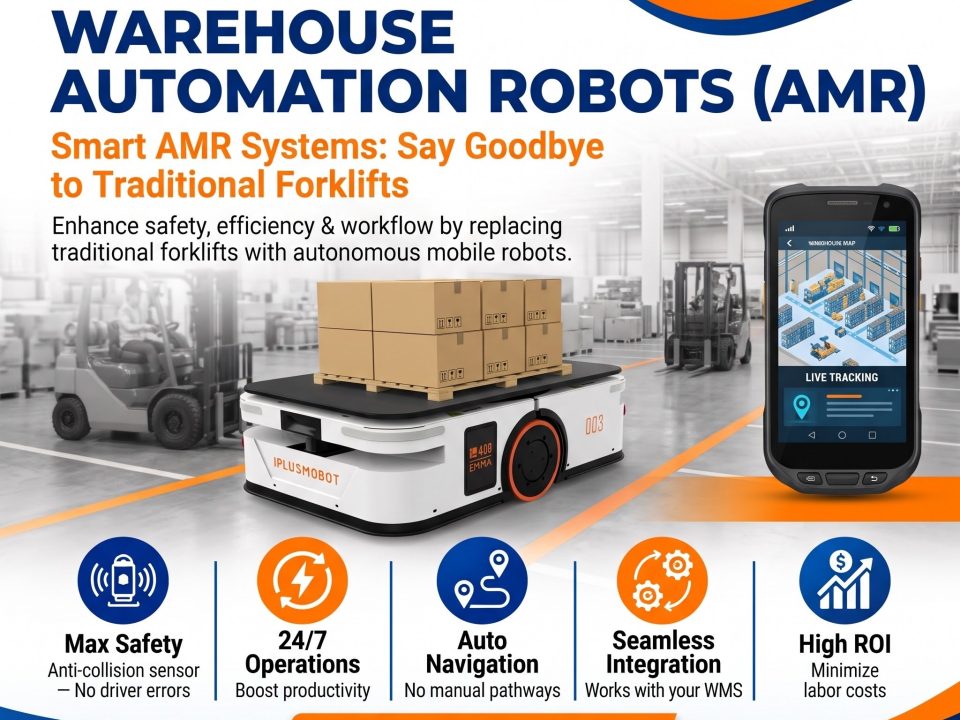
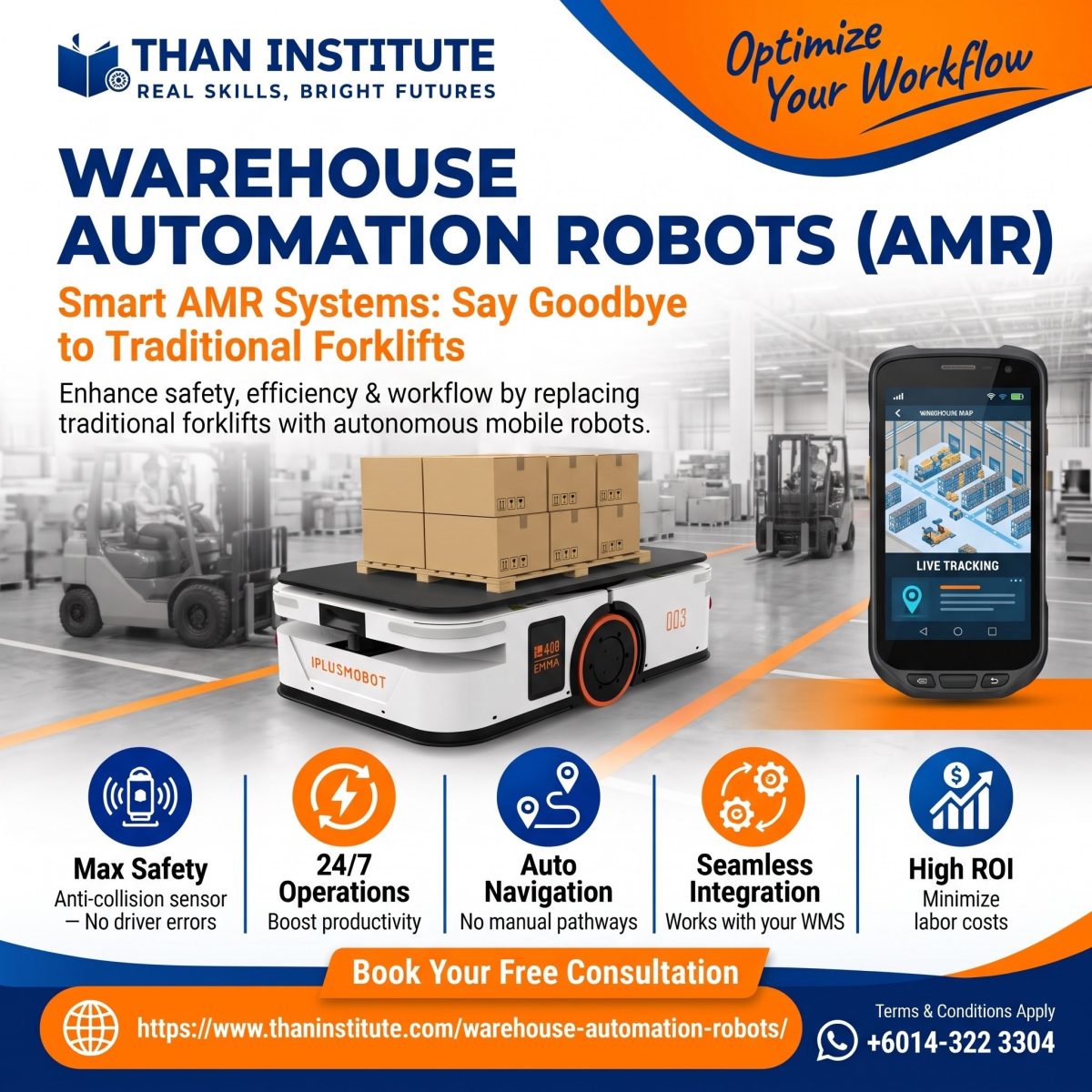
Warehouse automation robots (AMR) in Malaysia: replace traditional forklifts with autonomous mobile robots.
4 Warehouse Robot Use Cases: Rack, Roller, Tug and Pallet Handling
The four most common warehouse robot use cases are rack handling, roller handling, tugging and pallet handling. Rack handling moves shelves to people, roller handling feeds conveyors, tugging pulls carts and trolleys, and pallet handling lifts heavier loads with a customised elevated body.
What Can a Warehouse Robot Actually Do?
People often picture a warehouse robot as one machine doing everything. In practice, an AMR autonomous mobile robot is a flexible base that can be matched to a job. The same navigation, using Laser SLAM, vision and an inertial sensor, supports different top modules and tasks.
Understanding the use case first makes everything else easier. It tells you what payload you need, what kind of body fits, and where the robot will earn its place on your floor. Here are the four use cases we see most often in warehouse automation.
4 Warehouse Robot Use Cases
Each use case solves a different kind of walking or lifting problem. The next sections explain when each one fits and what to check before you commit.
Rack Handling and Roller Handling
Rack handling is the classic goods-to-person approach. Instead of staff walking to the shelf, the robot lifts the rack and delivers it. This works well when you have many similar racks and a fixed picking station. The lifting stroke on our range is 75 mm on the 400 kg model and 60 mm on the heavier models, so check that your rack legs and clearance suit it.
Roller handling is about connecting islands. Many warehouses have a conveyor in one zone and a packing area in another, with people carrying totes between them. A robot with a roller module can take that job, docking with an accuracy of ±2 mm so the handover to the station is smooth.
Tugging and Pallet Handling
Tugging suits operations that already use trolleys or carts. Rather than replacing the cart, the robot pulls it. That keeps your existing equipment in use and makes it an easy first project. It is a good fit for long routes that people walk dozens of times a day.
Pallet handling deals with the heaviest loads. Our range includes 1,000 kg and 1,500 kg payload options, and pallet jobs often use a customised elevated body. Because the body is tailored, share your pallet size and weight early so the right configuration can be planned.
Use Case at a Glance
| Use case | What the robot does | Good fit when |
|---|---|---|
| Rack handling | Lifts and carries a rack to a station | You want goods-to-person picking |
| Roller handling | Moves totes or cartons to and from conveyors | Conveyor zones need to be linked |
| Tugging | Pulls a cart or trolley between zones | You already use trolleys on long routes |
| Pallet handling | Lifts and moves pallets with an elevated body | Loads are heavy and standard |
How to Match a Use Case to a Robot
Once you know the use case, the choice narrows quickly. Start with the heaviest load for that job, then check the robot’s turning space against your tightest aisle. Our range runs from 400 kg to 1,500 kg, with turning space from 942 mm to 1,185 mm, and all models run for 8 hours on a 1.5 hour charge.
Floor conditions matter too. The robots tolerate gaps up to 35 mm and ground height differences up to 10 mm. For a full walk-through, read how to choose a warehouse robot, and if you are still comparing technologies, see AMR vs AGV and how AMR navigation works.
Where to Start
Pick the use case that matches your most repeated route and pilot it with one robot. Measure what changes, involve your team early, then add the next use case when you are ready. Teams that understand the system get more from it, which is why many pair a pilot with training such as the ThED Automate Program.
- Name the use case that matches your busiest route
- Weigh the heaviest load for that route
- Measure your narrowest aisle and tightest corner
- Decide how many shifts the robot must cover
Frequently Asked Questions
What are the main warehouse robot use cases?
The four main use cases are rack handling, roller handling, tugging and pallet handling.
Can one robot do more than one use case?
Lifting AMRs can handle several jobs, but the body and top module are matched to the task. Pallet handling often uses a customised elevated body.
What is the difference between tugging and lifting?
A lifting robot drives under a rack or cart and raises it. A tugging robot pulls a trolley or cart behind it.
Which use case should I start with?
Start with the route your staff repeat most often, where the load is similar every time and the start and end points are clear.
How do I choose the right payload for a use case?
Weigh your heaviest load with its goods and choose a payload that covers it with a margin. The range includes 400 kg, 600 kg, 1,000 kg and 1,500 kg options.
Related Guides
Which Use Case Fits Your Warehouse?
Share your routes and loads. We will help you match the right robot to the right job.
Talk to Than Institute →