SMS OTP and PDPA in Malaysia: What Every Business Needs to Know
How an AMR Autonomous Mobile Robot Navigates: SLAM, Vision and ±2mm Docking
AMR vs AGV: 7 Powerful Differences for Smarter Warehouse Automation
An AGV follows fixed paths such as magnetic tape or QR codes. An AMR autonomous mobile robot uses LiDAR, vision and SLAM to plan its own route and avoid obstacles in real time. For flexible warehouse automation, that freedom helps you move faster and grow easier.
What Are an AGV and an AMR Autonomous Mobile Robot?
An AGV (automated guided vehicle) is a driverless vehicle that follows a fixed route. That route is usually marked with magnetic tape, QR codes or wires in the floor, so the vehicle always travels the same trusted lines. It is predictable and dependable, which is why AGVs have served factories and warehouses for many years.
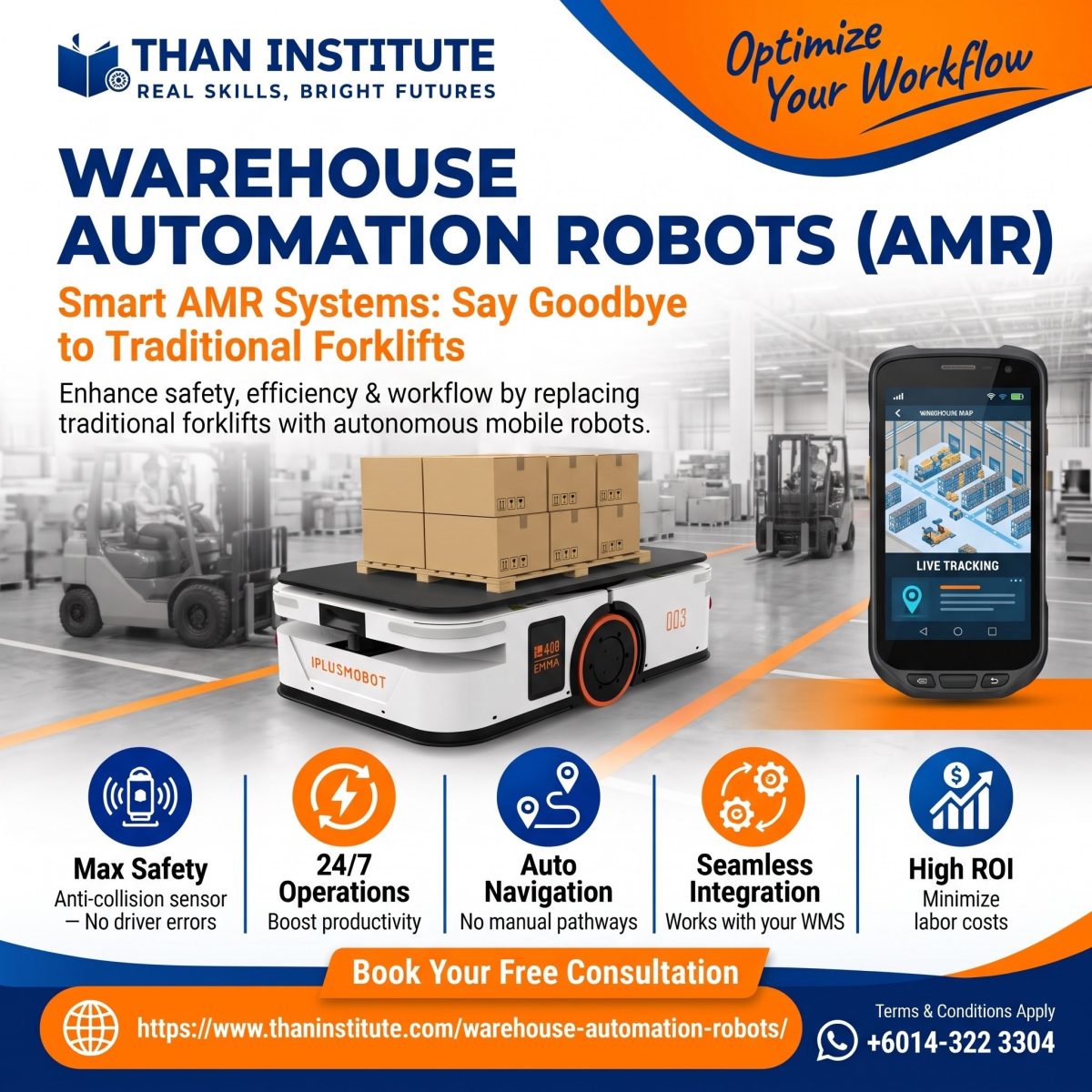
An AMR autonomous mobile robot takes a different approach. It carries LiDAR, cameras and an onboard computer, then uses SLAM (simultaneous localization and mapping) to build a map and find its own position. Instead of following a line, it decides the best route for each task and changes that route when something blocks the way. For modern warehouse automation, that independence is a major step forward.
AMR vs AGV Comparison Table
Both machines move goods for you. Here is how an AMR autonomous mobile robot and an AGV differ in daily warehouse automation work.
7 Benefits of Choosing an AMR for Warehouse Automation
Teams that move to an AMR usually notice the gains in the first weeks. These are the seven benefits that matter most.
5 Questions to Ask Before You Choose
Use these questions to decide whether an AMR, an AGV or a mix of both suits your site.
When an AGV Still Makes Sense
If your site is highly structured with fixed, repetitive routes, an AGV remains a dependable choice. A long straight transfer between two stations that never changes is a good example. Many Malaysian operators begin there, then add an AMR autonomous mobile robot as volume and layout complexity grow.
The two technologies are not enemies. Industry references such as this AMR technology overview describe the same split between path-following and dynamic navigation, and many sites run both side by side.
AMR Warehouse Automation in Malaysia
Malaysian manufacturers, distributors, e-commerce teams and freight operators all face the same pressure: handle more orders, with more accuracy, without adding more walking and manual carrying. A flexible warehouse robot helps by taking repetitive transfers off your team so they can focus on checking, packing and customer service.
Because an AMR needs no floor markers, it suits leased or shared warehouses where heavy installation is not practical. It also fits fast-changing seasonal operations, where racks and aisles move from one campaign to the next. That adaptability is what makes warehouse automation a realistic goal for businesses of many sizes, not only the largest.
How to Start Your Warehouse Automation Project
Meet the EMMA L Warehouse Robots
Our EMMA L range covers 400kg, 600kg, 1,000kg and 1,500kg payloads with ±2 mm docking. Compare every model, watch the video and enquire in one click.
View warehouse automation robots →Frequently Asked Questions
What is the main difference between an AMR and an AGV?
An AGV follows fixed paths, while an AMR plans its own route with LiDAR, vision and SLAM and adapts in real time.
Is an AMR better than an AGV for warehouse automation?
For changing layouts and growing operations, usually yes. For fixed repetitive routes, an AGV can still work well.
Does an AMR need floor tape or guide wires?
No. It navigates with sensors and a map, which lowers installation and maintenance effort.
Where can I learn the skills to run warehouse automation?
Explore the ThED Automate Program and our full program list.
Related Guides
Ready to Plan Your Warehouse Automation?
Tell us about your warehouse, loads and goals. Our team will help you find the right AMR autonomous mobile robot.
Talk to Than Institute →