SDG 12 – Responsible Consumption and Production and Its Benefits
STEM vs Traditional Learning: Why the Future Belongs to Curiosity
1. Introduction to SDG 17 – Partnerships for the Goals
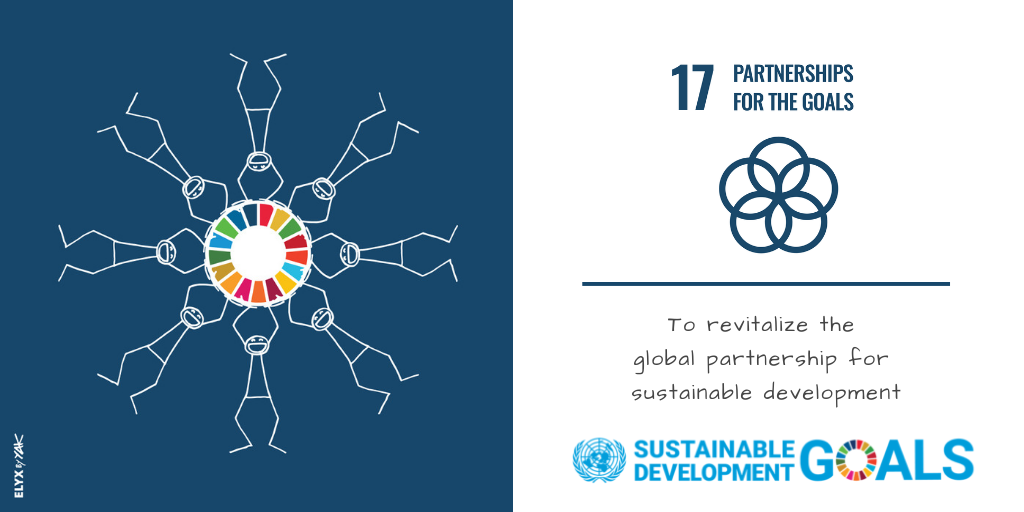
Sustainable Development Goal 17 (SDG 17) focuses on strengthening the means of implementation and revitalizing global partnerships to achieve all SDGs. It recognizes that complex challenges—education quality, climate resilience, inclusive growth—cannot be solved by any single actor. For Than Institute, SDG 17 is the accelerator that turns strong STEM programs into system-level outcomes: partnerships mobilize resources, open doors to real equipment and expertise, and connect learners to authentic problems that matter to communities and industries.
Key Points
- Partnerships are the “how” behind achieving every other SDG.
- Cross-sector collaboration multiplies reach, quality, and relevance.
- Than Institute leverages partners to turn STEM learning into impact.
2. The Core Targets of SDG 17
SDG 17 spans finance, technology, capacity-building, trade, policy coherence, multi-stakeholder partnerships, and data/monitoring. In education and STEM, these translate into co-funding labs and scholarships; transferring tools and know-how; training educators; opening procurement and internship pathways; aligning with public policies; and reporting outcomes transparently. At Than Institute, these targets guide partnership design so each collaboration contributes clear value to learners and measurable SDG progress.
Key Points
- Finance & capacity-building power labs, kits, and teacher PD.
- Technology transfer enables access to modern tools and platforms.
- Policy alignment and data improve accountability and scale.
3. Why SDG 17 Matters for STEM Education
STEM thrives on real problems, real tools, and real mentors. Partnerships connect classrooms to industry-grade datasets, emerging technologies, and community needs—turning theory into practice. Without SDG 17’s collaborative fabric, many schools face resource gaps and outdated content. By embedding partnerships, Than Institute keeps curricula current, expands student opportunities, and ensures projects deliver value beyond the classroom.
Key Points
- Partnerships make STEM applied, current, and career-linked.
- Shared resources lower costs and widen equitable access.
- Community briefs create purpose-driven, portfolio-worthy work.
4. Key Benefits of SDG 17 in Advancing STEM Education
4.1 Unlocking Resources & Funding
Co-funding with companies, foundations, and agencies equips labs, subsidizes fees, and sustains outreach to underserved learners. Joint grants and CSR programs reduce barriers so ambition—not income or postcode—determines opportunity at Than Institute.
Key Points
- Shared investment in labs, kits, and scholarships.
- CSR and grants extend reach to rural and B40 communities.
- Multi-year funding enables stable, scalable programs.
4.2 Technology Transfer & Infrastructure Access
Partnerships provide software licenses, cloud credits, devices, and access to maker spaces or university facilities. Guided tech transfer ensures staff and students can use tools safely and effectively, accelerating learning curves and innovation quality.
Key Points
- Access to current tools (cloud, AI, robotics, test gear).
- Training + SOPs ensure safe, productive usage.
- Bridges prototype-to-pilot with real infrastructure.
4.3 Co-Designing Relevant Curriculum with Industry
Employers co-create briefs, review rubrics, and mentor capstones so content matches real workflows. Students learn standards, documentation, and collaboration practices that signal job readiness to hiring managers across key sectors.
Key Points
- Curriculum mirrors real tools, datasets, and constraints.
- Mentor feedback sharpens portfolios and soft skills.
- Higher placement rates through relevance and visibility.
4.4 Research Collaboration & Data Sharing
Joint projects with universities and agencies open access to datasets and ethical research protocols, enabling evidence-based solutions. Students practice reproducible methods, privacy-aware design, and impact evaluation—skills prized in R&D roles.
Key Points
- Shared datasets for real analysis and modeling.
- Co-authored studies and open-source contributions.
- Stronger measurement of learning and community impact.
4.5 Scaling Impact via Networks & Policy Alignment
Being part of national and international networks spreads best practices and attracts new allies. Aligning with education and innovation policies unlocks recognition, credit transfer, and procurement opportunities that take programs to scale.
Key Points
- Networks amplify replication across schools and regions.
- Policy alignment enables accreditation and adoption.
- Shared indicators streamline reporting to stakeholders.
5. Than Institute’s Role in Supporting SDG 17 through STEM
Than Institute formalizes partnerships via MoUs that define goals, roles, and metrics; runs a mentor marketplace across industries; and publishes annual impact dashboards (enrollment, scholarships, internships, pilots). Partner playbooks standardize onboarding, safety, IP, and data ethics so collaborations are productive and learner-safe from day one.
Key Points
- Clear MoUs with KPIs: access, quality, outcomes.
- Mentor network + educator PD to build capacity.
- Transparent dashboards sustain trust and funding.
6. Real-World Impact: Case Studies & Examples
A university maker-lab MoU granted weekend access and training, doubling prototype throughput. A telecom partner provided cloud credits and datasets for IoT projects, leading to two pilot deployments with SMEs. An NGO collaboration funded mobile STEM labs that reached rural schools, with 40% of participants advancing into intermediate coding modules.
Key Points
- Facility-sharing and cloud credits accelerated prototyping.
- Pilots with SMEs validated student solutions in the field.
- Rural outreach converted exposure into sustained enrollment.
7. Challenges and Future Outlook
Challenges include coordination overhead, uneven partner capacity outside major cities, and sustaining funding through economic cycles. Than Institute’s roadmap: a partner CRM and calendar, regional mentor hubs with virtual options, diversified funding (CSR, grants, fee waivers), and parity KPIs (gender, geography, placement) to guide equitable scaling and continuous improvement.
Key Points
- Systemize collaboration with tools and clear governance.
- Blend on-site and virtual mentorship to widen access.
- Diversify funds; track parity and placement outcomes.
8. Conclusion
SDG 17 turns strong STEM curricula into community and industry change by aligning finance, technology, people, and policy around shared goals. By cultivating robust, ethical, and measurable partnerships, Than Institute prepares learners to build solutions that scale—and ensures those solutions reach the communities that need them most.
Key Points
- Partnerships multiply access, relevance, and real-world impact.
- Clear KPIs and ethics keep collaborations accountable.
- Than Institute connects learners to opportunities that matter.