Robot Gudang di Malaysia: Panduan Mudah untuk Mula Automasi Gudang
7 Things That Affect Warehouse Robot Cost in Malaysia
Warehouse Robot vs Forklift: Which Is Better for Your Warehouse?
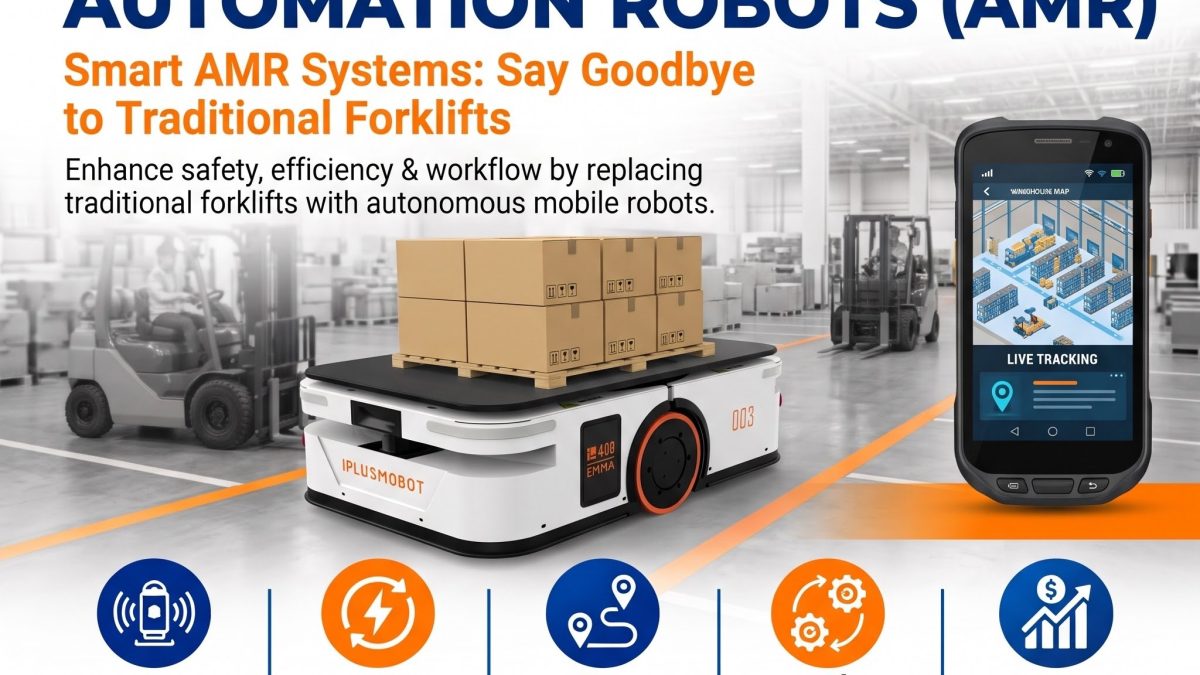
A forklift is still the best tool for lifting pallets high into racks, loading trucks and handling unusual loads. A warehouse robot (AMR) is better for the repeated, ground-level trips that happen all day, such as moving racks, carts and pallets between zones. Many Malaysian warehouses get the best result by using both: forklifts for lifting, robots for moving.
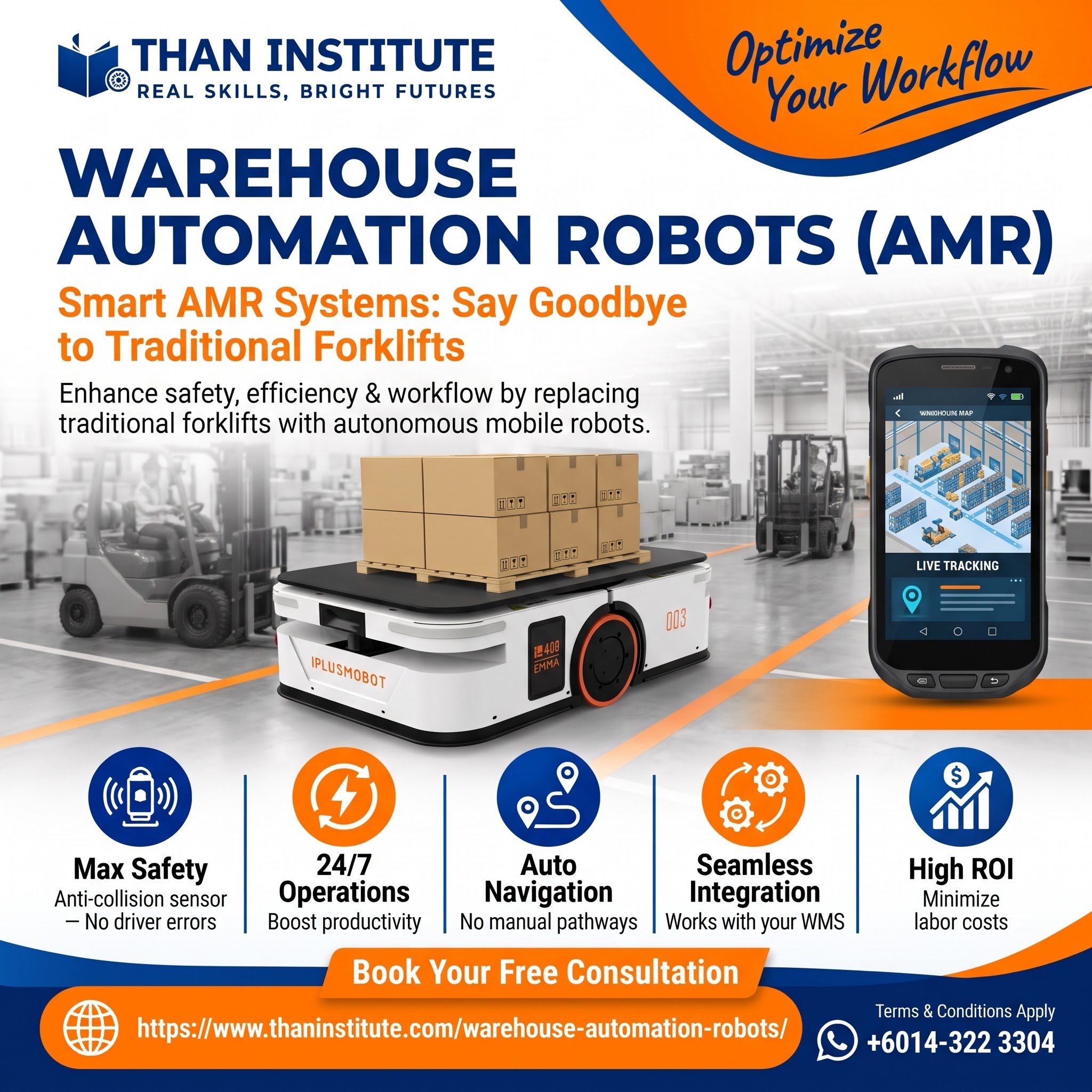
Warehouse Robot vs Forklift: Two Machines, Different Jobs
Forklifts have been the workhorse of Malaysian warehouses for decades. A trained operator can lift a pallet to the top rack level, load a container or move an awkward load that no machine was designed for. That flexibility is why almost every warehouse has at least one.
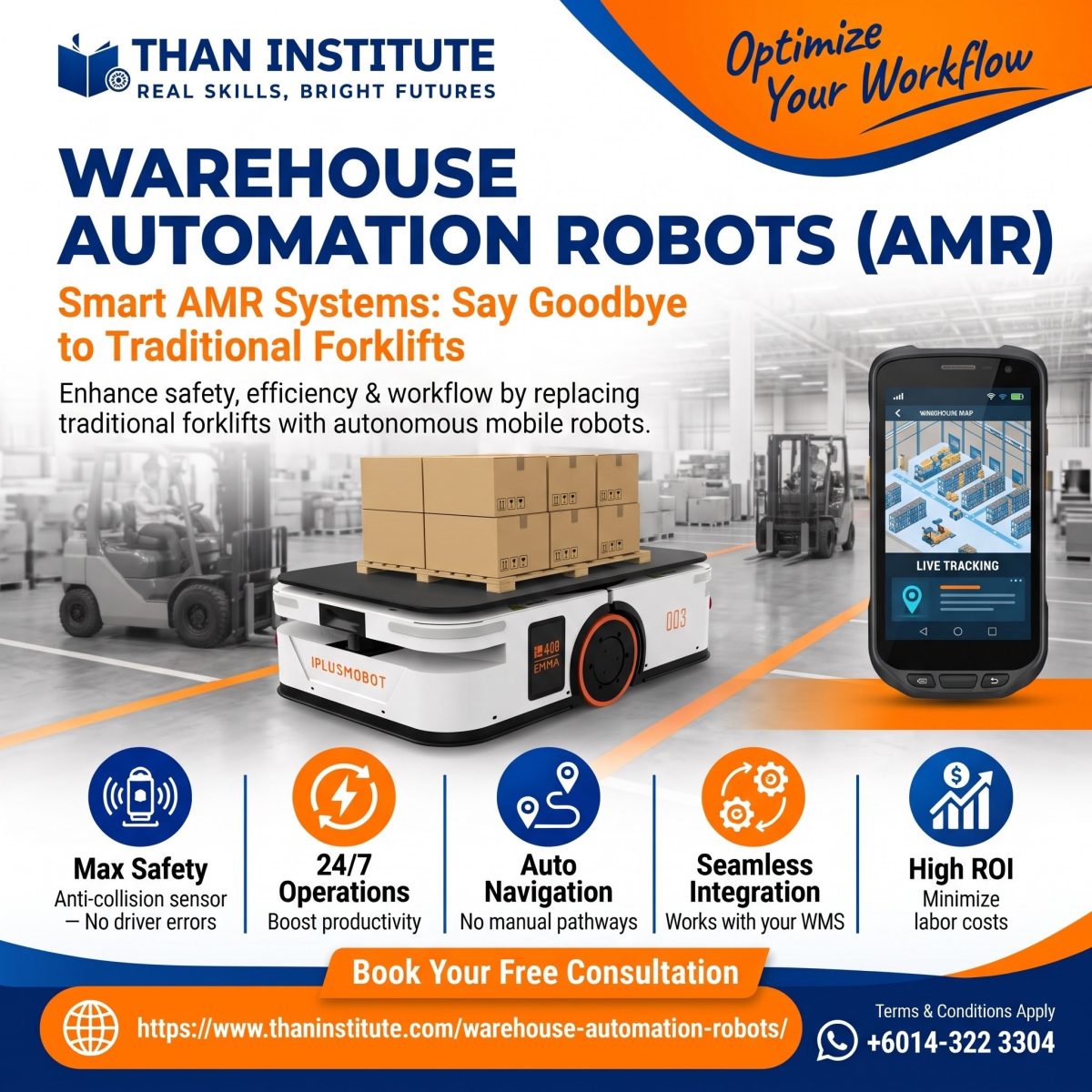
A warehouse robot, or AMR autonomous mobile robot, is built for a different kind of work. It drives itself along mapped routes using Laser SLAM, vision and an inertial sensor, carrying racks, carts or pallets at ground level from one point to another. It does not need a driver for each trip, and it follows the same instruction every time.
So the real question is not which machine is better overall. It is which machine suits each task in your flow. Once you look at your warehouse that way, the warehouse robot vs forklift question usually answers itself. Malaysian operators already work this way: MIDA has featured local warehouses where robots bring racks straight to pickers (read the MIDA feature).
Warehouse Robot vs Forklift at a Glance
Here is the warehouse robot vs forklift comparison on the points that matter most in daily warehouse automation planning.
| Factor | Forklift | Warehouse robot (AMR) |
|---|---|---|
| Main strength | Lifting loads to height and loading trucks | Repeated ground-level transfers between set points |
| Driver | A trained operator for every trip | No driver; staff assign tasks and supervise |
| Route | Wherever the operator drives | Mapped routes, re-planned around obstacles |
| Shift cover | Follows operator availability | 8 hours per charge, 1.5 hour charge |
| Handover accuracy | Depends on operator skill | Docking accuracy of ±2 mm |
| Best for | Racking at height, truck loading, unusual loads | Rack, cart and pallet trips that repeat all day |
Where a Forklift Is Still the Right Choice
Forklifts remain the right tool for several important jobs. Keeping them for these tasks lets your drivers use their skills where they count most.
Where a Warehouse Robot Does Better
The work that suits a robot best is the work your drivers find most repetitive: the same trip, the same load, many times a shift. Moving those trips to a robot frees your drivers for tasks that need their experience.
In any warehouse robot vs forklift plan, payload matters. Our range carries from 400 kg up to 1,500 kg. The 400 kg to 1,000 kg models travel at up to 1.5 m/s empty and 1.2 m/s loaded, so they handle most racks, carts and standard pallets with ease. See every model on our warehouse automation robots page.
Keeping Robots and Forklifts Moving Safely Together
When robots and forklifts share a building, a few simple rules keep traffic smooth for everyone. Most of them are good habits your team already knows.
With these basics in place, robots and forklifts work side by side comfortably, each doing the job it does best.
The Smart Answer: Use Both
For most warehouses, the warehouse robot vs forklift choice is not a replacement decision. It is a sharing decision. Let forklifts do the lifting, stacking and truck work they are best at, and let robots take over the horizontal trips that fill the day. Your drivers then spend more time on skilled work, and the robots keep the routine flow moving.
- List every forklift trip for one week
- Mark trips that are ground level, repeated and between the same two points
- Move those marked trips to a one-robot pilot
- Keep lifting, stacking and loading with your forklifts
Before you shortlist, check payload and aisle width with our guide on how to choose a warehouse robot. If you plan to run more than one robot, read warehouse robot safety and fleet management. To prepare your team, explore the ThED Automate Program.
Frequently Asked Questions
Can a warehouse robot replace a forklift?
For repeated, ground-level transfers, a warehouse robot can take over many forklift trips. For lifting to height and truck loading, a forklift remains the right tool, so most sites get the best result by using both.
Can warehouse robots and forklifts work in the same area?
Yes. AMRs detect obstacles and plan around them, and with clear traffic rules robots and forklifts can share a warehouse smoothly.
How heavy a load can a warehouse robot carry?
Our range covers 400 kg, 600 kg, 1,000 kg and 1,500 kg payloads, which suits most racks, carts and standard pallets.
What happens to my forklift drivers?
Drivers can focus on skilled work such as lifting, loading and handling special loads, while robots take care of routine trips.
How do I start?
List your most repeated forklift trips, pilot one robot on the busiest route, then expand step by step.
Related Guides
Want to See Which Trips a Robot Can Take Over?
Share your forklift routes, loads and shifts. Our team will help you find the right mix of forklifts and robots.
Talk to Than Institute →