Warehouse Robot ROI in Malaysia: How to Estimate Payback in 5 Steps
Warehouse Robot Implementation: 6 Steps From Site Visit to Go-Live
Use Case Guide
Warehouse Robots for E-commerce and 3PL in Malaysia: 5 Practical Uses
Warehouse robots for e-commerce and 3PL sites suit work that repeats all day. These warehouses move the same goods between the same points: receiving, storage, picking, packing and dispatch. A warehouse robot takes over those repeated ground-level trips, so your team can focus on accuracy and service. It also helps you add capacity in busy seasons by adding robots rather than rebuilding your layout.
Why Robots Suit Fast-Moving Warehouses
Online orders arrive in waves. A promotion, a payday or a festive season can double the work in a few days. Teams that rely only on walking and manual carrying feel that pressure first, because every extra order means more steps across the floor.
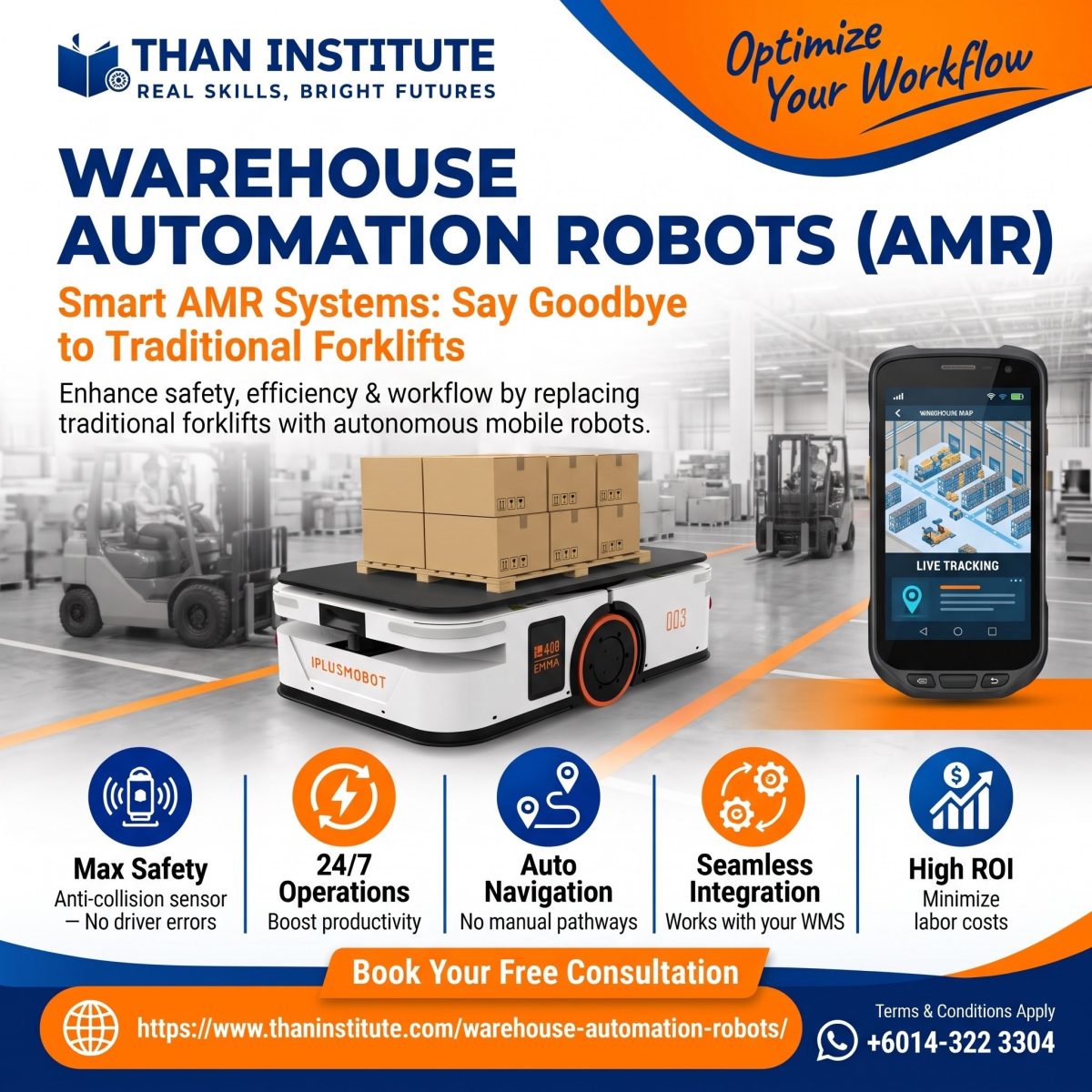
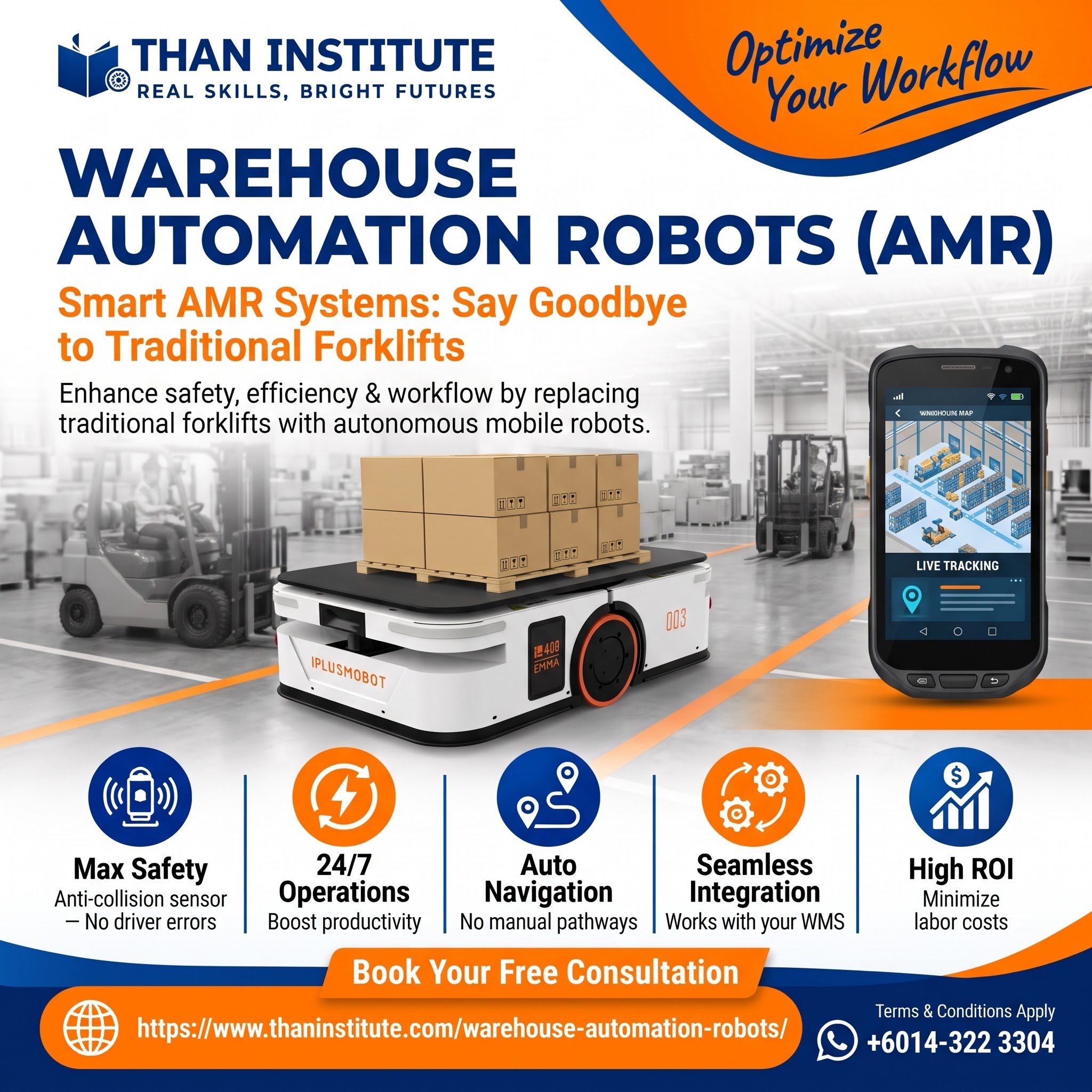
A warehouse robot, or AMR autonomous mobile robot, moves goods along mapped routes using Laser SLAM and vision, and re-plans around people and obstacles. Because it needs no floor tape or guide wires, it also suits leased and shared warehouses where heavy installation is not practical. Malaysian operators already use this approach: MIDA has featured local warehouses where robots bring racks straight to pickers (read the MIDA feature).
Warehouse Robots for E-commerce: 5 Ways Teams Use Them
Where Each Robot Type Fits
Our range covers 400 kg, 600 kg, 1,000 kg and 1,500 kg payloads, with rack, roller, tug and pallet handling styles.
| Task | Robot style | Why it helps |
|---|---|---|
| Racks to pickers | Rack handling | Goods come to the picker |
| Tote and carton transfer | Roller handling | Smooth handover to conveyors and stations |
| Carts between zones | Tug | One robot moves several carts |
| Pallets to storage | Pallet handling | Dock to rack trips without waiting for a driver |
How to Start Without Disrupting Orders
- List your most repeated trips for one normal week
- Choose one route that runs every shift
- Pilot one robot there and record the results
- Expand to the next route once your team is comfortable
Read 4 warehouse robot use cases for more detail, or check how to choose a warehouse robot. Prepare your team with the ThED Automate Program.
Planning Warehouse Robots for Peak Seasons
Big sale days, festive periods and payday promotions can turn a calm week into a very busy one. The challenge is not only more orders, but orders that must leave on time for each courier collection.
Warehouse robots help because they work to a steady rhythm. With 8 hours of runtime per charge and a 1.5 hour charge, you can plan robot shifts around your busiest windows, and add units when volume rises.
Layout Tips for 3PL and E-commerce Warehouses
A 3PL warehouse often changes layout as clients come and go. Because an AMR autonomous mobile robot navigates with a map instead of floor tape, it can adapt when racks and aisles move.
Choosing the Right Payload for Your Goods
Cartons and totes are light, while full pallets are heavy. Choosing the right payload keeps your robots busy and your costs sensible.
Our range covers 400 kg, 600 kg, 1,000 kg and 1,500 kg payloads. The 400 kg to 1,000 kg models travel at up to 1.5 m/s empty and 1.2 m/s loaded, so they suit most racks, carts and standard pallets. Pick the model that covers your heaviest load with a safe margin.
For more background on how robots find their way, read this AMR technology overview, then follow our 5-step guide to choosing a warehouse robot.
Order Flow Numbers Worth Tracking
Robots are easiest to justify when you can see the difference. Track a few simple numbers before and after your pilot.
Use these numbers to build a payback estimate with our warehouse robot ROI guide.
Keeping Your Team Involved
Robots work best when the people around them understand them. Invite pickers, packers and supervisors to the pilot and ask for their ideas on routes and stations.
With routine trips handled by robots, your team can focus on picking accuracy, packing quality and customer service. To build these skills across your team, explore the ThED Automate Program.
Why Warehouse Robots for E-commerce Make Sense in Malaysia
Online shopping keeps parcels moving through Malaysian warehouses every day. Orders arrive in waves, couriers collect at set times, and every late order is a customer waiting. Warehouse robots for e-commerce help because they take over the repeated carrying that slows these waves down.
The benefit is easy to picture. When a robot moves racks, totes and pallets, your pickers spend less time walking and more time picking. Your packers receive goods on a steady rhythm instead of waiting for the next trolley.
Warehouse robots for e-commerce also suit a growing business. You can start with one robot on one route, then add more as order volume rises. That keeps your first step small and your learning real.
Warehouse Robots for E-commerce at Every Stage of an Order
An order passes through several stages, and robots can help at most of them. Here is where teams usually see the clearest gains.
Warehouse Robots for E-commerce Fulfilment and 3PL Clients
A 3PL provider serves several clients at once, and each client has its own products, order patterns and peak days. That makes flexibility very valuable. Because robots follow a map instead of floor tape, you can change routes when a client joins, grows or leaves.
Warehouse robots for e-commerce fulfilment also give you clearer data. Trip counts and waiting times by route help you explain your work to each client, and help you plan capacity before a busy campaign starts.
If you share a building with other operators, a robot that needs no guide wires and no floor tape is also easier to introduce. Read how robots find their way in this AMR technology overview.
Manual Carrying vs Warehouse Robots for E-commerce
This simple table shows how the two approaches differ in daily work. Use it to start a conversation with your team.
| Area | Manual carrying | With robots |
|---|---|---|
| Daily trips | People walk each trip | Robots follow mapped routes |
| Team focus | Walking and carrying | Picking accuracy and service |
| Busy seasons | Add temporary hands | Add robots and keep the layout |
| Layout changes | Re-train routes by hand | Update the map and routes |
| Data | Estimates and notes | Clear trip counts and times |
A Simple 4-Week Pilot Plan for Warehouse Robots for E-commerce
A short pilot lets your team see the robot at work without disturbing live orders. This plan is a friendly starting point, so adjust it to your own site.
Track the results with our warehouse robot ROI guide, and follow the 6 steps of warehouse robot implementation for a full project view.
4 Common Mistakes With Warehouse Robots for E-commerce
Small habits like these make a big difference. A calm, step-by-step start is the surest way to build confidence.
Choosing Warehouse Robots for E-commerce: Questions to Ask
When you compare options, a short list of questions keeps the conversation practical. Ask about the payload range, the handling styles and the way the robot builds its map. Ask what the setup includes, and how your team will be trained.
Then match what you hear to your own routes. Warehouse robots for e-commerce work best when the model, the route and the team all fit together. Our 5-step guide to choosing a warehouse robot walks through this in detail.
Check readiness too. A few easy signs show whether your warehouse is ready, and you can find them in our readiness guide. When you are ready, our team can help you shortlist the right warehouse robots for e-commerce and 3PL work.
Planning Warehouse Robots for E-commerce Around the Sales Calendar
E-commerce demand follows the calendar. Knowing your busy windows lets you decide when to pilot, when to add robots and when to review. Here is a simple way to think about the year.
This rhythm is a strong reason to start early. A pilot in a quiet month gives your team time to learn, so the robot is a trusted helper by the time the next busy season arrives.
6 Habits That Keep Warehouse Robots for E-commerce Productive
Small daily habits keep robots moving smoothly. These are easy to adopt and cost very little.
Where to Go Next
Once you understand how warehouse robots for e-commerce fit your orders, a few guides help you plan the next steps. Compare the economics in our warehouse robot cost guide, learn how people and robots share space in our safety and fleet management guide, or see how robots compare with trucks in our warehouse robot vs forklift comparison.
When you are ready to talk about your own site, share your routes, loads and busy seasons. Our team will help you plan a calm, step-by-step start.
A Monthly Scorecard for Warehouse Robots for E-commerce
A simple monthly scorecard keeps everyone focused on the same results. Fill it in at the same time each month, and share it with your team and your clients.
| Measure | Why it matters | How to record it |
|---|---|---|
| On-time orders | Shows whether orders leave before courier cut-off | Orders shipped on time divided by total orders |
| Pick-to-pack time | Shows how smoothly goods reach packing | Average minutes from picking to packing |
| Trips per robot | Shows how much work robots take over | Trips completed per robot per shift |
| Waiting time | Shows where flow can still improve | Average wait at each station |
| Team feedback | Shows how people feel about the change | A short monthly chat with pickers and packers |
Matching Warehouse Robots for E-commerce to Courier Cut-Offs
Couriers collect at set times, and your dispatch area has to be ready for each pick-up. Robots help because they deliver packed orders to outbound lanes on a predictable schedule.
Work backwards from each collection time. Decide when packing must finish, when robots should move orders to the lanes and when the lanes must be clear. Then schedule robot trips and charging around those moments.
Over a few weeks, your scorecard will show whether orders are leaving on time. If a lane or station causes delay, adjust it, measure again and keep what works. This steady approach makes warehouse robots for e-commerce a dependable part of your daily routine.
Handling Returns With Warehouse Robots for E-commerce
Returns are a normal part of online selling, and they create their own repeated trips. Goods arrive at the dock, move to inspection, then go back to storage or to a repair area. Each of those trips can follow a fixed route.
A robot can carry returned cartons and totes between these points on a steady schedule. Your team then spends more time checking condition and updating records, which helps resellable stock return to the shelf sooner.
Start by mapping the return flow on paper. Mark where returns arrive, where they are inspected and where they are stored. If the trips repeat every day, they are a good candidate for your second robot route.
Start Your Warehouse Robots for E-commerce Plan Today
Every e-commerce and 3PL warehouse has its own rhythm. Some run busy mornings and quiet afternoons, while others serve clients across several time zones and shifts. A short conversation about your routes and loads is the easiest way to find your best starting point.
Bring a simple list: your busiest repeated trips, your heaviest load, your peak seasons and your shift pattern. With those four items, our team can suggest a suitable model, a sensible pilot route and a calm timeline for your site.
Warehouse robots for e-commerce do not have to be a big leap. A single robot on a single route is a friendly first step that lets your team learn, measure and decide with real facts.
Frequently Asked Questions
How do warehouse robots help e-commerce warehouses?
They take over repeated ground-level trips between receiving, storage, picking and packing, so staff can spend more time on picking accuracy and customer orders.
Can a 3PL warehouse use robots for different clients?
Yes. Robots follow mapped routes and tasks rather than fixed floor lines, so layouts can change as client needs change.
Do robots help during busy seasons?
Yes. With 8 hours of runtime per charge and a 1.5 hour charge, robots support longer shifts, and you can add units as volume grows.
Where should an e-commerce warehouse start?
Pick the busiest repeated route, pilot one robot there, then expand step by step as your team gains confidence.
Related Guides
Ready to Keep Orders Moving Smoothly?
Tell us about your routes, loads and peak seasons. Our team will help you find the right robots for your warehouse.