SDG 8 – Decent Work and Economic Growth and Its Benefits Toward
SDG 12 – Responsible Consumption and Production and Its Benefits
1. Introduction to SDG 9 – Industry, Innovation and Infrastructure
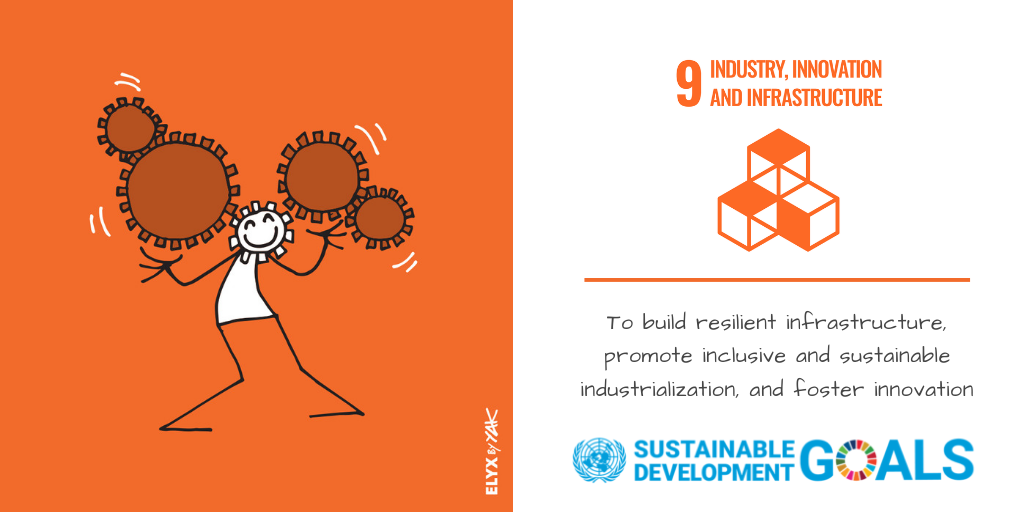
Sustainable Development Goal 9 (SDG 9) focuses on building resilient infrastructure, promoting inclusive and sustainable industrialization, and fostering innovation. In practice, SDG 9 asks education systems and industries to work hand-in-hand to create technology-enabled solutions, efficient production systems, and reliable networks—from transport and utilities to cloud and data infrastructure. For Than Institute, SDG 9 is the bridge that turns STEM learning into real-world capability: students gain the knowledge and hands-on practice to design prototypes, optimize processes, and deploy technologies that strengthen Malaysia’s competitiveness while serving communities more equitably and sustainably.
Key Points
- SDG 9 links education with real infrastructure and industry needs.
- Innovation thrives when learners can design, test, and deploy.
- Than Institute converts STEM learning into nation-building skills.
2. The Core Targets of SDG 9
SDG 9’s targets emphasize upgrading infrastructure for sustainability and resilience; promoting inclusive, sustainable industrialization; increasing small-business access to finance and value chains; enhancing scientific research and R&D spending; and enabling access to information and communications technology. Interpreted through a STEM lens, these targets call for curricula that develop engineering, data, and design capabilities; maker spaces and labs that support prototyping; and partnerships that open routes to internships, equipment, and funding. At Than Institute, the targets shape program goals, assessment rubrics, and external collaborations so learning outcomes map directly to SDG 9 impact.
Key Points
- Upgrade infrastructure for resilience, efficiency, and inclusivity.
- Scale sustainable industrialization and SME participation.
- Grow research capacity, innovation ecosystems, and R&D.
- Expand access to digital networks, tools, and skills.
3. Why SDG 9 Matters for STEM Education
Infrastructure and industry do not advance by policy alone—they need skilled people who can build, maintain, and improve complex systems. STEM education develops those people. Aligning with SDG 9 ensures students practice applying maths and science to authentic problems: designing IoT sensors for water systems, modeling traffic flows, optimizing energy use, or engineering safer manufacturing lines. This focus turns classrooms into mini innovation hubs, improves graduate employability, and anchors STEM’s societal purpose: building systems that are robust, fair, and future-ready.
Key Points
- STEM converts theory into infrastructure and industry solutions.
- Authentic, applied projects improve employability and impact.
- SDG 9 orients learning toward resilient, inclusive systems.
4. Key Benefits of SDG 9 in Advancing STEM Education
4.1 Strengthening STEM–Industry Collaboration
SDG 9 encourages deep collaboration between educators and employers so that projects, tools, and standards mirror real operations. Than Institute co-develops briefs with companies and public agencies, brings engineers into classrooms for critiques, and aligns capstones with genuine pain points. Students learn industry-grade workflows and safety practices while producing portfolio artifacts that demonstrate job readiness.
Key Points
- Co-designed briefs and guest engineer feedback loops.
- Capstones tied to measurable operational outcomes.
- Portfolios signal readiness to hire and deploy.
4.2 Building Innovation Capacity & R&D Culture
Innovation capacity grows when learners iterate: research, prototype, test, and refine. Than Institute embeds design thinking, rapid prototyping, and data-driven evaluation into modules so students experience the full R&D cycle. This cultivates curiosity, resilience, and evidence-based decision-making—the same habits that fuel patents, process improvements, and startup formation.
Key Points
- Design–prototype–test loops build creative confidence.
- Data and evidence underpin technical decisions.
- R&D culture seeds patents, improvements, and ventures.
4.3 Developing Digital & Physical Infrastructure Literacy
Modern infrastructure blends physical assets with digital layers—sensors, connectivity, cloud, and AI. Than Institute teaches systems thinking across both domains: electronics and control systems; networking and cloud; cybersecurity and reliability; safety and compliance. Graduates can contribute to projects that span roads to routers, grids to dashboards, giving employers versatile talent for integrated systems.
Key Points
- Systems thinking across mechanical, electrical, and digital layers.
- Foundations in networking, cloud, and cyber hygiene.
- Safety, standards, and compliance built into labs.
4.4 Accelerating Green and Resilient Technologies
SDG 9 intersects strongly with climate action and resilience. Than Institute integrates energy efficiency, renewable systems, circular design, and climate risk into student projects—from smart energy monitors to low-waste manufacturing layouts. Learners practice designing solutions that cut emissions, reduce downtime, and withstand shocks, aligning innovation with environmental and social responsibility.
Key Points
- Green modules: renewables, efficiency, and life-cycle design.
- Resilience: redundancy, fail-safes, and risk-aware planning.
- Solutions balance performance, cost, and sustainability.
4.5 Improving Productivity & High-Value Careers
When students learn to automate workflows, analyze data, and optimize processes, organizations gain productivity—and graduates access higher-value roles. Than Institute’s emphasis on industrial automation, data analytics, and quality engineering equips learners to deliver measurable gains in throughput, cost, and safety, opening doors in advanced manufacturing, logistics, healthtech, agritech, and smart cities.
Key Points
- Automation and analytics drive measurable productivity.
- Quality and safety skills reduce defects and incidents.
- Graduates qualify for specialist and leadership pathways.
5. Than Institute’s Role in Supporting SDG 9 through STEM
Than Institute operationalizes SDG 9 through maker spaces, industry co-ops, and outcome-based capstones that address real infrastructure or process challenges. Credentials signal specific competencies (e.g., PLC basics, CAD/CAM, cloud fundamentals), while partnerships provide mentors, equipment access, and internship routes. Outreach and scholarships ensure motivated learners—urban and rural—can participate in this innovation ecosystem.
Key Points
- Maker spaces and labs for prototyping and testing.
- Skill badges that map to industry-standard tools.
- Scholarships and outreach widen equitable access.
6. Real-World Impact: Case Studies & Examples
Student teams have delivered IoT water-level monitors for flood-prone areas, basic predictive maintenance dashboards for SME factories, and campus microgrid simulations that optimize solar and storage. These prototypes earned pilots with local partners, internships for team leads, and invitations to share methods with community groups—evidence that SDG 9-aligned STEM learning translates into tangible infrastructure and industry value.
Key Points
- Prototypes progressed into pilots with SMEs and agencies.
- Internships and roles secured via demonstrable outcomes.
- Community adoption validates relevance and impact.
7. Challenges and Future Outlook
Constraints include uneven lab access, rapid tech cycles, and limited mentor availability beyond major cities. Than Institute’s roadmap: mobile labs and hybrid delivery, annual curriculum refreshes tied to tech roadmaps, a national mentor marketplace across sectors, and impact metrics (pilots launched, defects reduced, energy saved) to guide investment and partnerships. Scaling these levers will deepen SDG 9 outcomes across regions.
Key Points
- Close access gaps with mobile labs and device lending.
- Keep content current with scheduled refresh cycles.
- Track impact metrics to allocate resources effectively.
8. Conclusion
SDG 9 turns STEM classrooms into engines of nation-building—where learners design resilient infrastructure, improve industrial processes, and launch innovations that serve people and planet. By embedding SDG 9 principles, Than Institute develops graduates who can plan, build, and scale systems that power inclusive prosperity and sustainable growth throughout Malaysia and beyond.
Key Points
- STEM + SDG 9 = resilient systems and inclusive industry growth.
- Applied learning produces portfolios and measurable outcomes.
- Partnerships amplify reach, relevance, and long-term impact.