7 Things That Affect Warehouse Robot Cost in Malaysia
Warehouse Robot ROI in Malaysia: How to Estimate Payback in 5 Steps
How Warehouse Robots Help Malaysian Factories: 5 Practical Uses
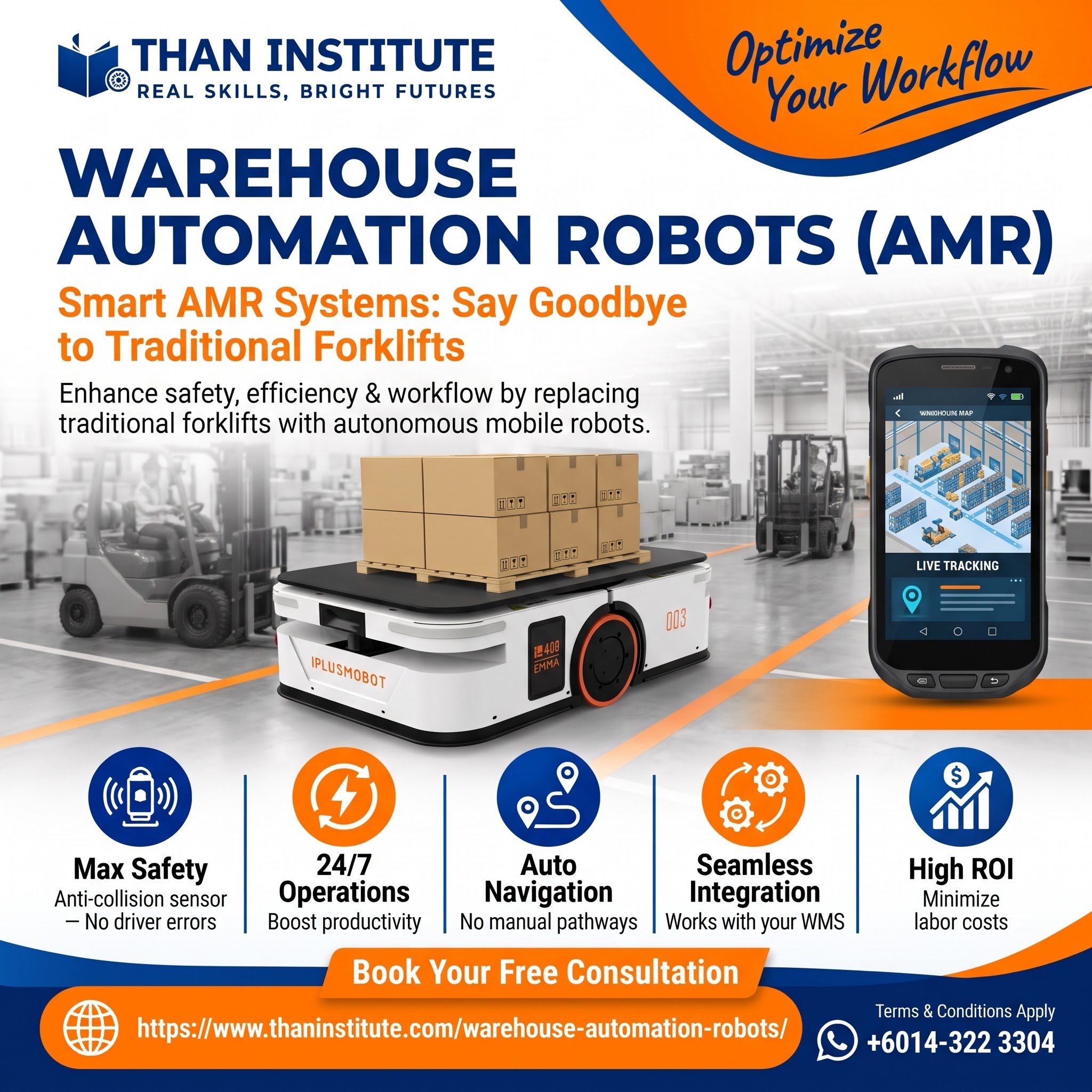
In Malaysia, warehouse robots for factories are most useful for five jobs: line-side material delivery, moving work-in-progress between processes, taking finished goods to the warehouse, towing kitting carts and returning empty racks or carts. These are short, repeated trips that an AMR autonomous mobile robot can run reliably across shifts while your team focuses on production.
Why Warehouse Robots for Factories Make Sense
A factory floor is full of short trips. Raw materials go from the store to the line. Half-finished parts move from one process to the next. Finished goods travel to packing and then to the warehouse. Each trip is small, but together they can keep many people walking and pushing trolleys all day.
Many Malaysian manufacturers, from electronics to food and beverage, run on tight schedules and multiple shifts. Industry voices quoted by Frost & Sullivan name electronics manufacturing and food and beverage among the fastest-growing automation segments in Malaysia. When materials reach the line on time, production flows smoothly. Warehouse robots for factories help by running those internal trips on schedule, every time, so your skilled operators can stay at their stations and focus on quality.
5 Practical Uses on the Factory Floor
These five uses of warehouse robots for factories share one thing: the same trip, many times a shift. That is exactly the kind of work an AMR handles best. For a closer look at each robot type, read 4 warehouse robot use cases.
Factory Tasks and the Right Robot Set-Up
Use this table to match a factory task with the robot set-up that suits it.
| Factory task | Robot set-up | Good fit when |
|---|---|---|
| Line-side delivery | Rack lifting or tugging | Lines need regular top-ups |
| Work-in-progress transfer | Rack lifting | Parts move between set stations |
| Finished goods | Rack or pallet handling | Output leaves the line on a steady schedule |
| Kitting carts | Tugging | Carts travel long, repeated routes |
| Empty returns | Rack lifting or tugging | Empty racks or carts gather at the line |
What to Plan in a Factory Setting
When you plan warehouse robots for factories, a few needs differ from a pure warehouse, so it helps to plan for them early.
For heavier production loads, our 1,000 kg and 1,500 kg models suit pallets and large racks, while the 400 kg and 600 kg models fit tighter aisles and lighter parts. Compare every model on our warehouse automation robots page.
What Your Production Team Gains
Bringing robots into a factory is as much about people as it is about machines. When routine trips move to a robot, your team gets back time and focus for the work only they can do.
These gains grow as you add routes. Many teams using warehouse robots for factories start with one line, then extend robots to the store, packing area and warehouse as the team gains confidence.
How to Start in Your Factory
The easiest way to start with warehouse robots for factories is the material trip your line relies on most. For many factories, that is line-side delivery of a high-use component. Pilot one robot on that route, watch how smoothly materials reach the line, and expand once your team is comfortable.
- Pick one production line and its busiest supply route
- Note the load weight, rack or cart type and trips per shift
- Involve line leaders and operators from the start
- Review results, then add routes, lines or robots step by step
Skills matter as much as machines. The ThED Automate Program helps your team understand automation and run it with confidence. If your factory also uses forklifts, see how both can work together in warehouse robot vs forklift.
Frequently Asked Questions
Can warehouse robots be used in factories, not just warehouses?
Yes. Warehouse robots for factories are widely used for material movement, including line-side delivery and moving work-in-progress between processes.
Can a robot work with my existing racks and carts?
Often yes. Lifting robots drive under compatible racks and tugging robots pull existing carts. Share photos of your racks and carts so the right set-up can be planned.
Will robots support all our shifts?
Each robot runs about 8 hours per charge with a 1.5 hour charge, so with good charging planning robots can support multi-shift production.
Can robots share aisles with forklifts and people?
Yes. AMRs detect obstacles and re-plan their route, and with clear traffic rules everyone can share the factory floor smoothly.
Where is the best place to start?
Start with the material trip your line relies on most, pilot one robot there, then expand to more routes and lines.
Related Guides
Keep Your Production Lines Supplied
Tell us about your lines, loads and shifts. We will help you plan a robot route that fits your factory.
Talk to Than Institute →